

Accomplished BC Poet Renée Sarojini Saklikar Offers Insights & Editing Tips
An interview by Cynthia Sharp
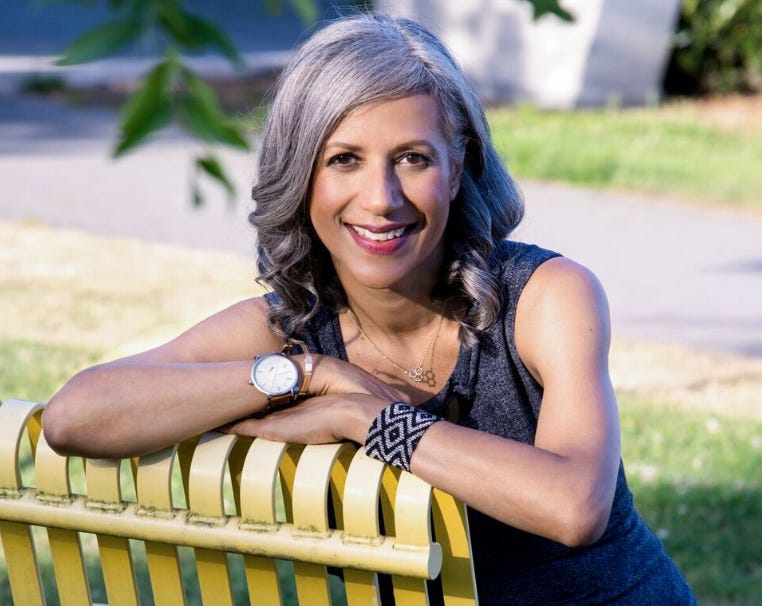
I always appreciate the opportunity to host Renée Sarojini Saklikar, whether as part of a panel when I moderated Word Vancouver and The Federation of BC Writers’ 2022 Art Meets Science exploration of hope in climate poetry, which featured her compassion through Bramah and the Beggar Boy as we discussed the intersection of ecology and literature in our humanitarian responsibility to prevent suffering, or one-on-one for The Seaboard Review, getting to learn about her personal poetry journey.
Cynthia: Hi Renée. Thanks so much for sharing your insights and time with our readers. To start off, I'm wondering who your favourite poets are?
Renée: So many! I’m always on the lookout for Canadian poets, particularly those whose poetics touch on “the urgency of now.” For example, I enjoy reviewing books published by Caitlin Press like The Small Way by Vancouver author Onjana Yanghwe.
A few others: Ottawa poet rob mclennan; the late, great Peter Culley (from Nanaimo). American poets Rusty Morrison and Terrance Hayes. And I’ve a soft spot for poet laureates such as Vancouver’s former poet laureate Rachel Rose, having completed my term as Surrey’s first ever Poet Laureate. Another big favourite: Indigenous poet Joshua Whitehead. Also Metis poet, Tristan Greyeyes, who is also a film/maker.
Cynthia: Who was your favourite poet when you were a youth?
Renée: Walter De La Mare: my father would read me his poems: “Someone came a knocking on my wee small door” (from memory…)
Cynthia: When did you start to write poetry?
Renée: I’ve been scribbling away since I was a little girl…not really knowing that my love of sound and image, then my habit of jotting down words, was part of what poets and writers do…
Cynthia: How has poetry helped you in life?
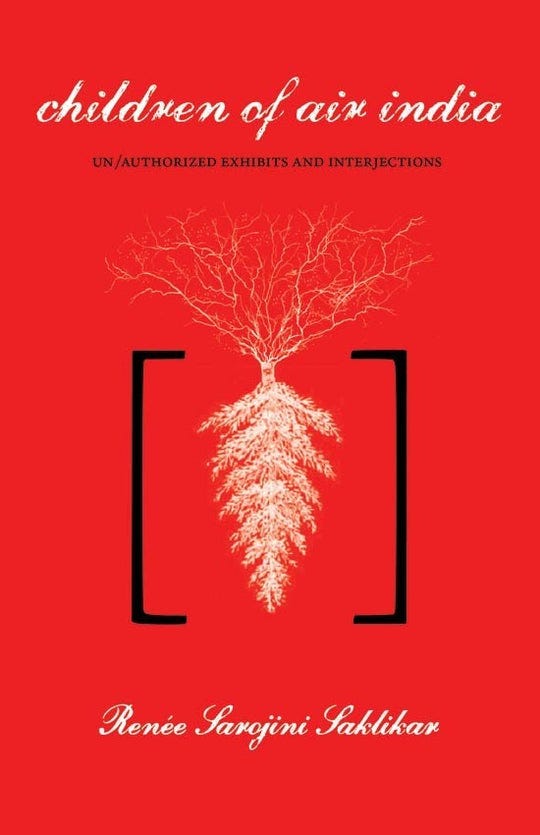
Renée: Saved me! American poet Theodore Roethke, “in a dark time, the eye begins to see.” My first book, children of air india, un/authorized exhibit and interjections (Nightwood Editions, 2013), totally changed my life.
Cynthia: What did it mean to you to be Surrey’s first Poet Laureate?
Renée: Such a rich, rewarding, complex, experience! I learned so much about language, culture, identity, geography from connecting with teens, seniors, and everyone in between. An honour to be the first Poet Laureate for a large, fast growing suburban/Edge city. Huge props to the Surrey City Libraries who hosted and supported so much of the laureate program.
Cynthia: How does poetry help society in your view?
Renée: Maybe poetry and the making of poetry helps us to not look away from what is jagged, incomplete, hurting or abandoned. But that’s just a guess. Poetry just is. That’s its particular beauty.
Cynthia: How do you know when a poem is finished?
Renée: May the poem never end! I’m always wanting to re/vise, to see anew, to surprise. Restless for another way to make the page come alive. Also, perhaps paradoxically, maybe the poem stops and rests, and attains a kind of solidity, and then, if I’m attentive enough, I find a way to step back and give space to what the work wants/needs. The work will tell you what it needs.
Cynthia: What do you look for when editing and polishing a poem?
Renée: Pretty much everything, particularly what I call “unity of voice,” where all the parts seem to fit into something greater than the whole, but each poem and every poet’s poetics (theory of language/anti-theory) is so unique, that one of the things I look for is how the words and the language do more than describe or narrate: how does the language, how do the line breaks and the sounds and rhythms, and devices of the words, evoke and embody the secret dark heart at the centre of any poem?
Cynthia: What has most surprised you about poetry?
Renée: Pretty much everything! The way that almost anything can be made into a poem.
Cynthia: Do you have any suggestions or tips for new writers submitting to journals and entering contests?
Renée: Sure thing: Golden Rule: try and leave time for revision; we all benefit from having a chance to take a second or third, or fifth look, once the poem has poured out of us…Let the words find their own space for a while. Then come back to what you’ve tapped out on your phone or scribbled in your bullet journal or scribbled on those scraps of paper crumpled up in your pocket: Time is your friend.
*First published in The Federation of BC Writers Blog in 2018

About the Author
Renée Sarojini Saklikar is the author of six books, including the award-winning Children of Air India and Listening to the Bees. Her poetry, essays and short fiction have appeared in many literary magazines and anthologies, including Exile Editions, Chatelaine, The Capilano Review, and Pulp Literature.
Bramah’s Discovery (April 2026, Nightwood Editions) is the latest volume of her epic fantasy in verse, THOT J BAP, The Heart of This Journey Bears All Patterns. This speculative fiction/poetry series, known collectively as “The Bramah Books,” features a time-travelling locksmith named Bramah, “brown, brave and beautiful.” Renee Sarojini loves creating Young Adult speculative fiction, (Told Under the Linden Tree, Pulp Literature magazine, No 37, Winter 2023) and is working on a children’s book spin-off series from the Bramah books, Bramah and The Seed Jar (forthcoming Nightwood Editions) for which she received a Canada Council grant.
Renee Sarojini was poet laureate for the City of Surrey 2015–2018 and volunteers for Event magazine, Meet the Presses collective, Surrey International Writers Conference and Poetry in Canada . Renée Sarojini teaches creative writing at Douglas College and helps to host Lunch Poems at SFU. Find out more https://thecanadaproject.wordpress.com/