

The Art of Peace—An Interview with Writers International Network Founder & President Ashok K. Bhargava
Interview by Cynthia Sharp

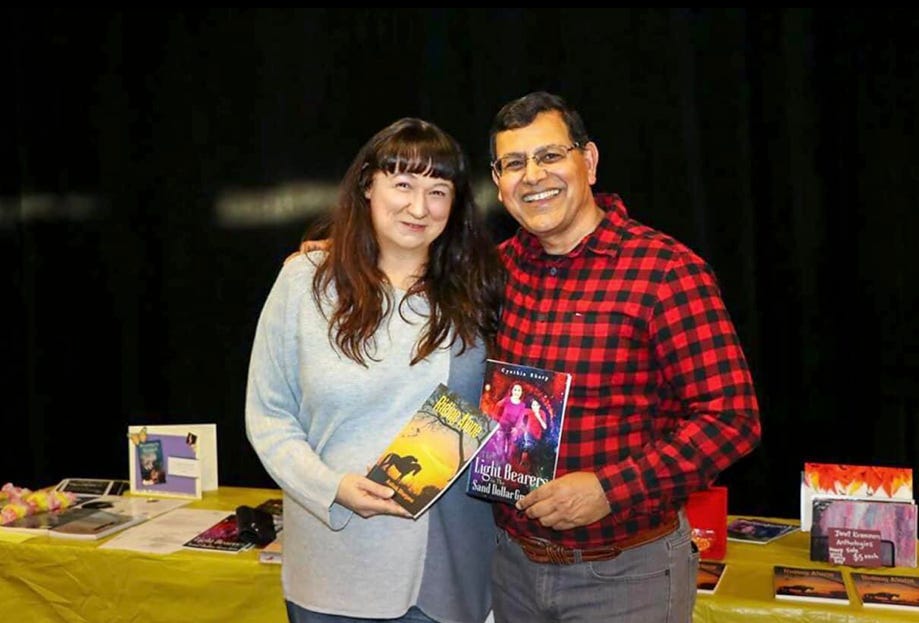
When I was named the Writers International Network (WIN) Poet Laureate, I had the pleasure of speaking with WIN founder and president Ashok K. Bhargava about his goals and inspiration for WIN Canada. It was an immense pleasure to converse about WIN’s annual UNESCO (United Nations Educational, Scientific and Cultural Organization) event and monthly activities hosted in Vancouver.
Cynthia: Peace is at the heart of any multicultural WIN event and UNESCO gatherings are clear evidence of that unique flavour, weaving communities together into harmony and common purpose. What does peace mean to you?
Ashok: What you see depends upon what you’re looking for.
Wherever it is we are going and however we choose to get there, we are in this together. Therefore, to me, peace is ACCEPTANCE of our differences. We live in a multicultural, multilingual and multi-religious society—living in harmony in our diversity is peace. Harmony within and with our friends is peace.
Cynthia: You’re someone who embodies peace in all the ways you live and work as a writer, performer, emcee, mentor and organizer behind the scenes. How do you achieve that way of being in daily interactions? It seems like it’s coming from deep within and I wonder how you bring forth and embody peace in all that you do?
Ashok: There is no single way to embody peace because it is a multi-layered entity. We have to be creative in empowering people. Writing and sharing poetry is an excellent way to achieve peace.
Cynthia: Poetry is definitely a form of magic—a chance to listen to each other, to really hear what someone else is feeling, their struggles, hopes and where they are coming from.
Ashok: Yes, I see myself as a rational person, yet also a dreamer and an optimist who admires friendship, acceptance and adaptability. My philosophy of life is to live in harmony and love, to inspire and be inspired and to cultivate positive values such as helping, caring and sharing. My childhood journey of self-discovery may have influenced who I am today—always a champion of the underdog, a defender of those less privileged and a fierce and resounding voice in support of equality and human rights.
Cynthia: It’s so important to create space to give voice, dignity and respect to everyone we can. The WIN website explains that:
WIN strives to unite the hearts and souls of writers, to bring creativity, knowledge and joy to them.
“An artist’s gift to the world is a poem, story, painting, sculpture or dance.” WIN will seek, nourish and recognize all sorts of artists so that together they can make this world a better place to live.
Writing is an art that is deeply rooted in self-reflection. Self-reflection is the human capacity to exercise introspection and the willingness to learn more about our fundamental nature, purpose and essence. In other words, self-reflection is who we see when we look in the mirror. Self-reflection is also about taking the time to figure out who we are, both as individuals and as leaders.
WIN was created to fulfil the need for an environment where the work of artists is appreciated and recognized no matter what background, what language or what cultural heritage that artist belongs to.
Cynthia: Writers International Network has done an exemplary job of finding and showcasing the gold within each person who attends and presents at monthly gatherings. It’s an enriching experience for all involved. I’m wondering how you came up with the mandate for WIN?
Ashok: The most powerful thing that you can do to change the world is to change your own beliefs about the nature of life, people, and reality to something more positive and begin to act accordingly.
To paraphrase from Senator Robert F. Kennedy, there are those who look at things the way they are, and ask why. I dream of things that never were, and ask why not?
Cynthia: What philosophy or philosophies guide WIN?
Ashok: We are guided by Vasudeva Katumbham’s view, WE ARE ONE FAMILY. One Humanity. No color, no barriers.
Cynthia: You recognize the contributions of writers internationally and cross-pollinate communities that may not have otherwise taken notice of each other. What have been some of the highlights of WIN award ceremonies and celebrations?
Ashok: WIN was founded in 2011 as a non-profit organization in British Columbia to promote creativity, peace, harmony, human rights and awareness of the need to protect the natural environment. Since its inception, WIN has recognized many Canadian and international writers and community leaders at its annual literary festivals. We have also participated in literary symposiums at the University of Sabanchi, Turkey and the University of Bari, Italy.
Additionally, it has collaborated with writers and activists in the province of Pangasinan, Philippines, to sustain and promote a dying language through recognition and protection of old-growth trees.
WIN has also successfully collaborated with writers in Ghana to promote literary arts in their country.
In addition, WIN is communicating with an international community of writers and artists in locations like New Delhi to focus on “Unity in Diversity”—a global movement for literary and cultural exchange. WIN knows that unity in the arts and writing needs no justification beyond the sheer splendour of its own existence and that without aesthetic pleasures, life would not be worth living. WIN believes that poetry is universal. There is no human society, however isolated, that has not developed poetry as a form of cultural practice.
Cynthia: What is at the heart of WIN events for you? How did you go about bringing so many communities and poetic styles together across languages and borders?
Ashok: World Poetry Day was declared by UNESCO (the United Nations Educational, Scientific and Cultural Organization) in 1999. The purpose of the day is to promote the reading, writing, publishing, and teaching of poetry throughout the world, and as the UNESCO session declaring the day explains, to “give fresh recognition and impetus to national, regional, and international poetry movements.”
Poetry reaffirms our common humanity by revealing to us that individuals, everywhere in the world, share the same questions and feelings.
Poetry is the mainstay of oral tradition and, over centuries, can communicate the innermost values of diverse cultures. In celebrating World Poetry Day, UNESCO recognizes the unique ability of poetry to capture the creative spirit of the human mind. Even today, many people in India regularly recite poems of Kabir, Nanak, Meera Bai, Bulleh Shah and Tulsi Das.
For Writers International Network (WIN), celebrating Poetry Day is to reaffirm our faith in the oneness of humankind. WIN believes that our differences are superficial. Although we have different languages, cultures and colours, these differences add to the beauty of the human mosaic. Poetry makes us realize that a common thread of sublime creativity binds us together.
Cynthia: I love how your celebration of World Poetry Day with readings and potluck meals has extended to so much more community outreach with a climate change chapbook and other ongoing projects. There’s a sense of gentleness and optimism in WIN’s programming that I see in all the talented and humble board members. One of the things I’ve really noticed about you as an organizer is that you work from a sense of service rather than a sense of ego. What goes on behind the scenes to provide WIN gatherings, honorariums for writers and award ceremonies?
Ashok: WIN is a non-profit organization based in British Columbia, Canada, to inspire, encourage and promote creative writing in a multicultural and multilingual environment. WIN celebrates the literary arts with song, dance, readings and the rewarding of prizes.
Among the recipients of WIN awards are: Dennis E. Bolen, Herb W. Bryce, Ujjal Dosanjh, Janet Kvammen, Candice James, Evelyn Lau, Bonnie Nish, Alejandro Mujica Olea, Cynthia Sharp, Bonnie Quan Symons and Eva Waldauf.
Cynthia: They are such joyous celebrations! I’m still on a high! WIN events often have shared food from a multitude of cultures and cultural blends and an overall sense of respectfulness between poets, writers, photographers, and artists of many ethnicities and styles. What helps to create that atmosphere?
Ashok: It is my desire to bring out the best in creativity, cuisines, emotions, and ideas that guides me to create an all-inclusive environment. I like to fashion our gatherings after how our neighbourhoods sound, taste, and look.
Cynthia: In a practical sense, what guidelines would you suggest for creating an energy of peaceful interactions? What strategies have helped WIN hold true to its vision of respectfulness?
Ashok: Acceptance of our differences. Take a little extra time to discover those who are different, show respect and follow your heart.
Cynthia: What advice do you have for writers and organizers in other parts of the province and country wanting to follow in WIN’s footsteps?
Ashok: First, please feel free to join us. Everyone is welcome at WIN events.
In terms of setting up similar communities, I would start with conversations and chart new strategies. We live in very dynamic times. Rather than looking for templates, I would encourage people to collectively create new approaches, being true to their inner wisdom and hearts.
Cynthia: Thank you for your time and insight. You’re a strong poet in addition to being an invigorating community leader. Where can readers find your books?
Ashok: I have books on Amazon and in libraries. You may also email me at bhargava2000@yahoo.com


About the Author
Known as Canada’s Mary Oliver, Cynthia Sharp is the Writers International Network Vancouver Poet Laureate. She’s the author of Ordinary Light, a first-prize winner in the Sunshine Coast Writers and Editors Society BC Author Awards, as well as in the International Impact Book Awards in Sustainability and Contemporary Poetry. She also penned Rainforest in Russet and The Light Bearers in the Sand Dollar Graviton. Her poems and reviews can be found in many literary journals including CV2, untethered and The Pitkin Review and have been nominated for the Pushcart Prize and Best of the Net Anthology.
 | A guest post by
|