

Coastal Healing by Bruce Graham
A shattered soldier. An unexpected rescue. A second chance at redemption.

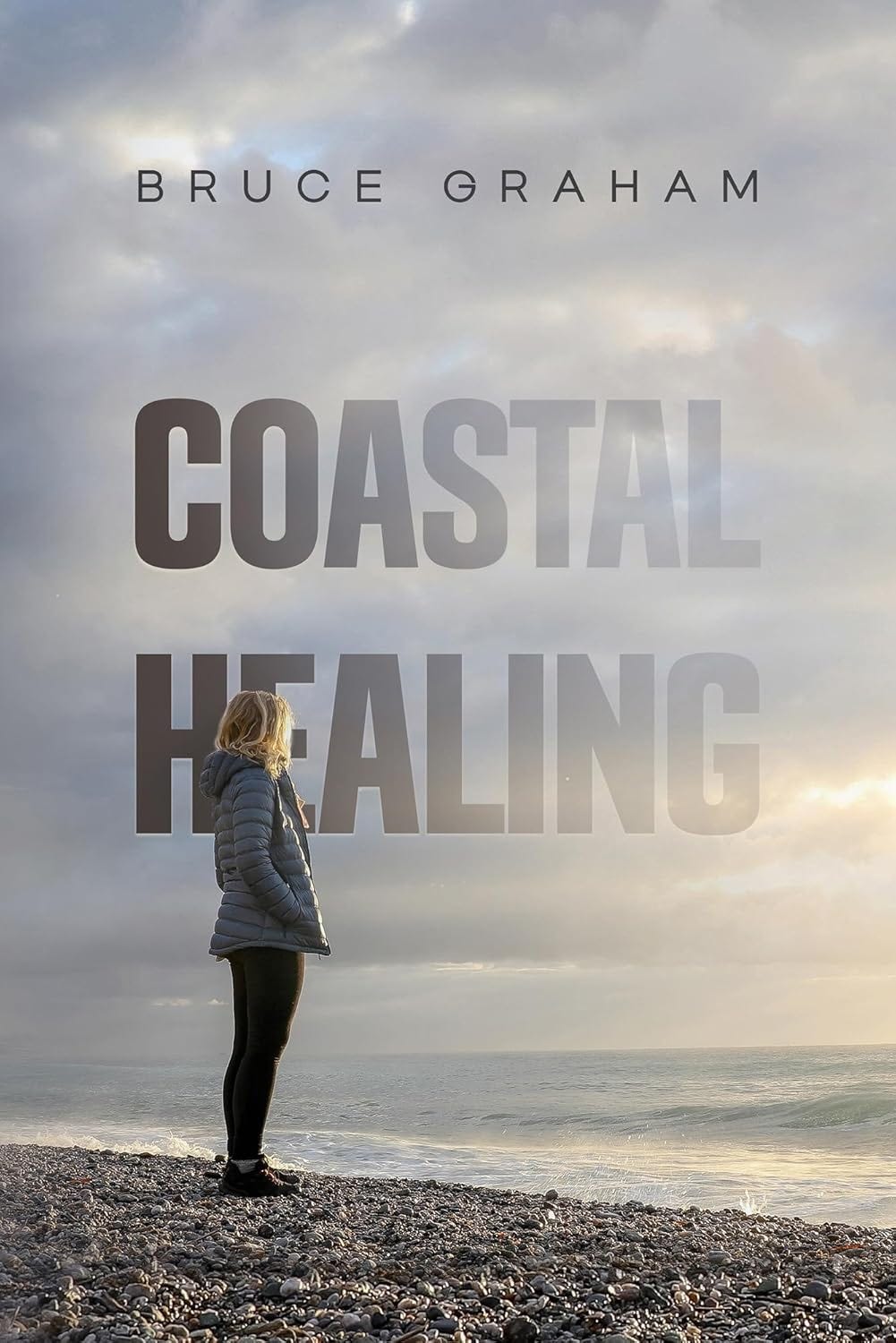
In his novel Coastal Healing, Bruce Graham tells a story of homecoming that captures the mood and spirit of the people of the Parrsboro shore, recalling the nostalgia and freedom of a way of life while acknowledging the often-harsh reality that nature is stronger than we are.
“It is a serious story but told with simplicity and affection.”
I appreciate the way the author opens with an overview of the geographic setting, its social milieu, and its expressions, inviting the reader to participate in this special world. He further grounds the setting in the opening anecdote, which describes how Lester salvaged most of a house that washed in on the tide, to the entertainment of his neighbours. This haphazard building became central in many lives, a place to recall all the summer gatherings, a place to make memories of growing up. A place to return to.
When Heather’s mother, something of a free spirit, was dying, she brought her daughter to her brother, Lester, who raised Heather from the time she was seven. Heather, Lester’s daughter Boots, his son Gus, and his other niece Marg all grew up under Lester’s watchful eye, spending summers at the shore and winters in town. They were taught to be independent but ever observant: the tides on the Fundy coast move with speed and power; a moment’s inattention can be fatal.
As the novel opens, Heather has come home following years of moving, studying, and exploring her interests, ultimately enlisting in the military and completing a tour of duty in Afghanistan. Now she finds herself back on the shore, at an impasse in her life as she recalls the trauma of her military years and waits for her discharge papers. It seems Heather has been intolerant of misogynistic remarks and actions, and she expects her reactions to these to affect the terms of her release from duty. She does not expect an honourable discharge. On one hand, we can applaud her stance in a biased setting; on the other, we know a dishonourable discharge will make it very hard to find solid employment.
In any family crisis, all family is there. And when others are in crisis, family rushes out to help. Thus, Heather, who wants nothing more than to live quietly and unknown, without publicity, without explanations, finds herself cast onto a world stage. Everyone on the shore turns out to help when a Norwegian boat goes down in a storm, but Heather, through her military training, is the one who knows how to stop the arterial bleeding in one sailor’s damaged leg. She saves his life and rapidly becomes an internationally recognized hero. Instead of being flattered, she fears the military will find out and publicize the reasons for her dismissal from service. People do look for heroes, but do not necessarily embrace heroes thrown out of the military for misconduct, and she dreads having her past broadcast to the world. She turns down interviews, speaking engagements, proposals. She wants to turn down a medal, but her aunt Gert intervenes.
Family is important, a central force in shore life, with gatherings and close-knit associations. At the same time, it is not static. Lester’s sister, Gert, for example, is quick to criticize, to accuse, to be angry—but in a moment can be clinging to the same person in tears, embracing them with all the love she has. Lester is revealed in the love and respect others have for him, his sense of family and community spirit—and his surprising dislike of Angus. Angus, it seems, is viewed with suspicion and some contempt by all in the community, except Gus, Lester’s gentle son, who regards him as a friend. Eventually, this acceptance influences others, particularly Heather, but also Angus himself. We see the emergence of Heather’s cousin Marg from a sullen, bitter woman, often jealous of Heather for the freedom she sees in her and the admiration others have for her, to a happy, confident woman in love. It will take time for Gert, her mother, to accept her, but as she begins to contemplate grandchildren, we know that battle is won. For love is, in the end, Gert’s way, as we learn it is for all their circle. Family is a dynamic force, and there is nothing lukewarm in its intensity. In that, it reflects the shore.
Love will enter the narrative in other ways, and saving the life of one Norwegian sailor will become, on more than one level, a life-altering experience for Heather.
We learn the essential details of each character, except perhaps Boots, for we never quite know why she is absent, only that she was part of an intricate family cluster, and now only mentioned in passing. And although we learn the essential characteristics of those we do meet, we do not have lengthy, introspective, focused analysis of each nuance of character; this suits the context of the shore life, in which all characteristics are shadowed by the power of nature.
It is a serious story but told with simplicity and affection. On one level it is an easy read, while on another it is a paradigm for life and love. It is a story to contemplate while rambling the Fundy shore, one eye amazed by the layering of the clouds on the far-off horizon, one eye giving close watch to the fast-moving tidal line at one’s feet. For the story captures, in its gentle telling, the beauty and the tension that life holds.

About the Author
Bruce Graham has authored a dozen books, with three adapted for the stage. His storytelling is backed by an award-winning career in broadcasting. A graduate with honours from the Radio and Television Arts program at Cambridge School in Boston, he has earned three prestigious awards: a Lifetime Achievement Award from the Canadian Radio & Television News Directors Association, the Ohio State University Award for journalistic excellence, and an Atlantic Journalism Award for his widely respected nightly television commentary, The Final Word.
About the Reviewer
Anne M. Smith-Nochasak grew up in rural western Nova Scotia, where she currently resides and teaches part-time after many years working in northern communities. She has self-published three novels using the services of Friesen Press: A Canoer of Shorelines (2021), The Ice Widow (2022), and River Faces North (Taggak Journey, Book 1, being released in early September 2024). She is currently a member of the Writers Federation of Nova Scotia. https://www.acanoerofshorelines.com/
Book Details
Publisher : Purple Porcupine Publishing
Publication date : Sept. 16 2025
Language : English
Print length : 186 pages
ISBN-10 : 1738899578
ISBN-13 : 978-1738899579
 | A guest post by
|