

Hooked by Asako Yuzuki
A Review by Chris Reed

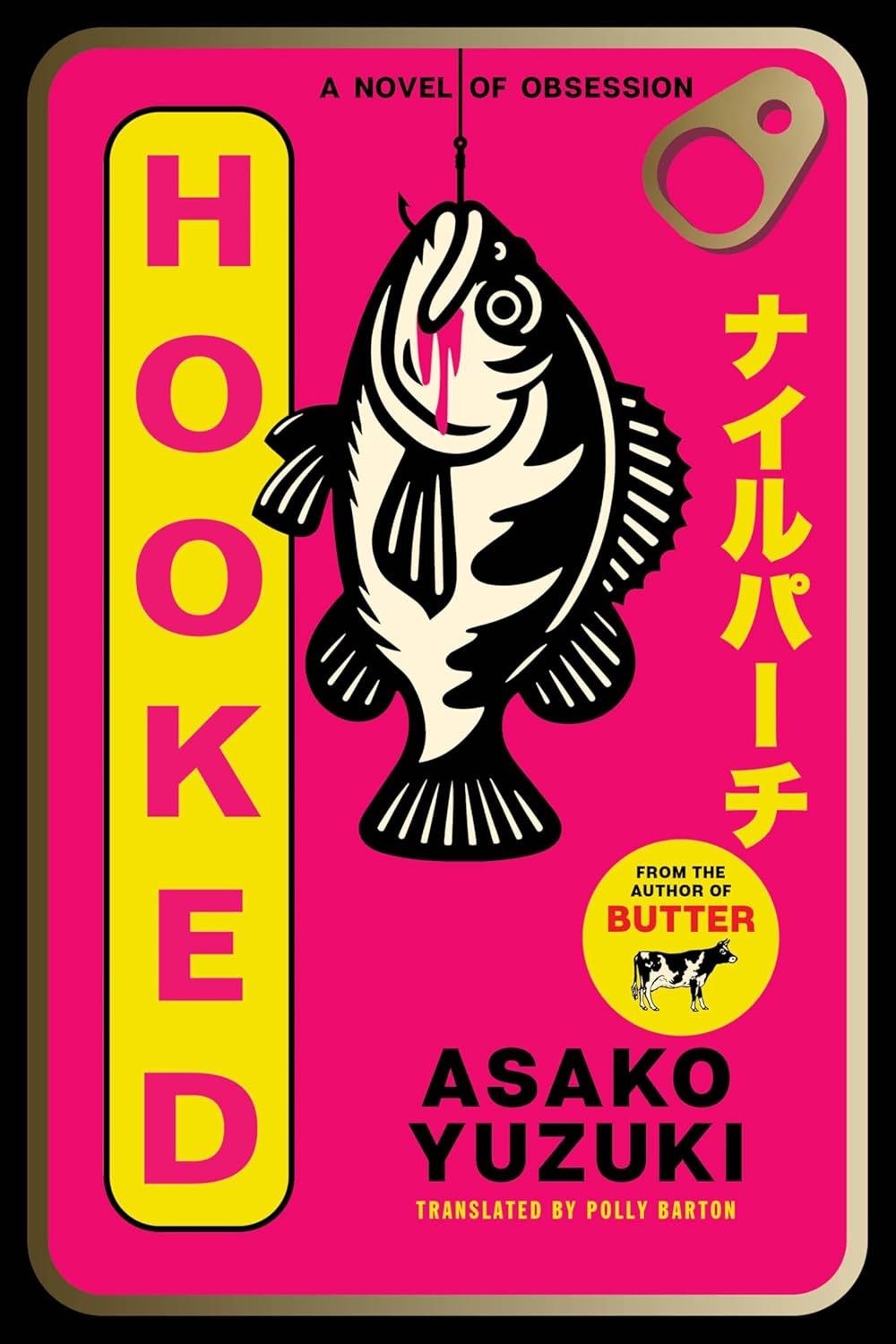
Loneliness is often framed as a personal failing, a lapse in character or effort. In Hooked, Asako Yuzuki encourages readers to consider a more troubling idea: loneliness as a basic social condition, generated by the expectations that shape adult life. Written before her widely celebrated English-language debut, Butter, but only recently translated by Poly Barton, Hooked explores how the desire for recognition, particularly within female friendships, can become overburdened, distorted, and, in extreme cases, dangerous.
Set in contemporary Tokyo, Hooked centres on two women in their thirties whose isolation resists easy explanation. Eriko is an immaculate professional at a trading company—disciplined, self-contained, successful and incapable of sustaining intimacy with other women. Shoko is a married lifestyle blogger whose public persona transforms domestic chaos and self-deprecation into charm. Their lives appear sharply divergent, yet Yuzuki is less interested in contrast than in attraction. Both women are lonely, and each invests female friendship with more hope than it can plausibly sustain.
“Yuzuki’s sharp eye for the absurdity of adult social performance sharpens the novel’s escalating structure.”
The relationship begins when Eriko, a devoted reader of Shoko’s blog, engineers “an introduction.” At first, the connection resembles tentative friendship, even relief: the promise of being understood. Admiration soon hardens into fixation, and intimacy slides toward coercion. The narrative escalates through stalking, blackmail and reciprocal harm. Its trajectory is unmistakably dark, yet Yuzuki resists framing the story as a simple account of “toxic friendship,” or as a case study in individual pathology. Instead, she focuses on the social conditions that cause friendship itself to carry such destabilizing weight.
Eriko’s ravenous longing for a “best friend,” and Shoko’s uncertainty about what female closeness might demand of her, resonate because Yukuzi refuses to treat loneliness as a personal quirk. Both women inhabit worlds structured by familiar expectations—marriage, beauty, likeability, competence, domestic ease—that make sustained solidarity difficult to imagine and even harder to maintain. Hooked does not suggest that women are naturally driven into rivalry. Rather, it exposes social systems that train grownups of all stripes to compare, rank, and quietly resent one another.
Yuzuki’s adept at rendering social pressures at the level of character. Eriko is not merely threatening; she is rigid, frightened, brittle and painfully recognizable in her hunger for confirmation. Shoko, meanwhile, is no simple counterweight. She, too, performs a socially sanctioned version of femininity, carefully calibrated for approval, and that performance carries its own costs. Throughout the novel, Yuzuki shows how social demands are internalized as style, tact, embarrassment and habit; how ideology becomes lived experience.
Some of the social terrain in Hooked feels slightly dated. The blogging world it depicts, for instance, belongs to an earlier phase of online self-exposure. Even so, Yuzuki captures something pressing about public performance: how readily it entangles itself with self-worth, and how destabilizing identity becomes when recognition falters. She is equally incisive about office life, depicting workplaces where petty hierarchies and gendered expectations harden into invisible rules, enforced less by malice than by routine.
Much of Hooked reads as black comedy, though of a claustrophobic and punitive kind. Yuzuki’s sharp eye for the absurdity of adult social performance sharpens the novel’s escalating structure. Each turn pushes events slightly beyond expectation, prompting us to pause and reassess. Are these characters behaving implausibly, or has the novel simply made visible the desperation latent in ordinary life? Even when the narrative strains credibility, it holds our sympathy because each excess reads as the next deformation of an already damaged social world.
Hooked is a disturbing tale of how chronic loneliness can warp judgment, making extreme actions seem sensible, albeit briefly. Yuzuki succeeds in using plausibility as a literary device: scenes occasionally take a melodramatic turn, inviting doubt that, ironically, clarifies the characters’ motivations and makes them more credible. By the novel’s end, Hooked reveals how a vague desire for recognition can readily morph into an obsession, exposing intimacy as a force that wounds as deeply as it binds.

About the Author
Asako Yuzuki was born in Tokyo in 1981. Her English-language debut, Butter, an international bestseller, was named Waterstones Book of the Year 2024 and took home the British Book Awards 2025 Debut Fiction Award. For Hooked, she received the Yamamoto Shūgorō Award.
About the Reviewer
Chris Reed is a freelance book publicist (@reedbookspublicity) and an occasional book reviewer, based in Toronto.
Book Details
Published by HarperCollins Canada
Pub Date: March 17, 2026
ISBN: 9780063442412
Paperback
Price: $22 CAD
 | A guest post by
|