

In my humble opinion: My So-Called Life, by Soraya Roberts
A Throwback Thursday review by Melanie Jackson

In 1951, a compelling new personality burst – or perhaps it’d be more appropriate to say sulkily shuffled – onto the literary scene. Holden Caulfield, protagonist of J.D. Salinger’s novel The Catcher in the Rye, was the first teenage boy to be neither mostly good (think Tom Sawyer), or mostly bad (think Flashman, the bully in Tom Brown’s Schooldays).
Instead, refreshingly, Holden was a realistic 16-year-old jumble of compassion vs. impatience, insights vs. insecurities, opinions vs. self-doubts. Of traditional rules, whether in a game or in society, he scoffs, “Game, my ass. Some game.” Of himself, “I’m the most terrific liar you ever saw in your life.” Holden’s fun, poignant, and irresistible angst made Catcher an instant classic.
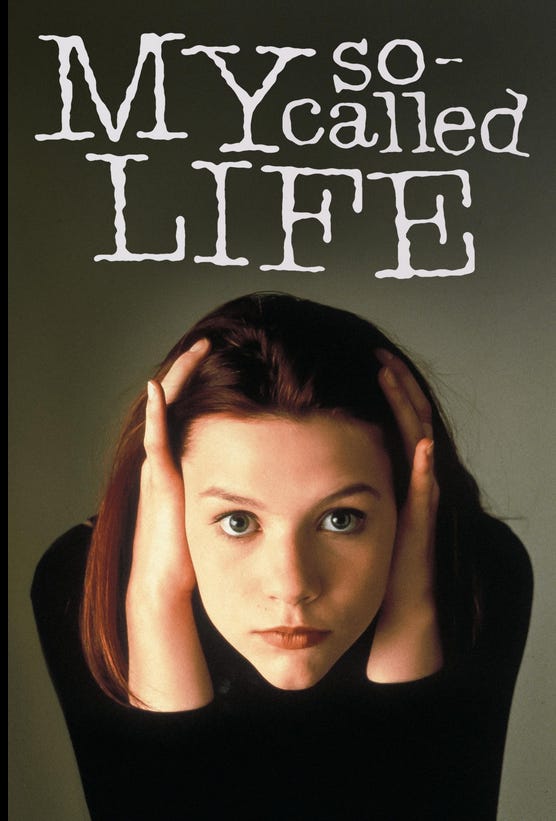
Just one catcher. I mean, catch. Where was Holden’s fictional female equivalent? Only after 43 years did she make her début: Angela Chase, in the TV series My So-Called Life. More of an anti-début, actually. In her very first moment of screen time, Angela (Claire Danes) looks straight into the camera and says, half-irritated, half-apologetic, “Um, excuse me.” Right away you knew this show was going to rock.
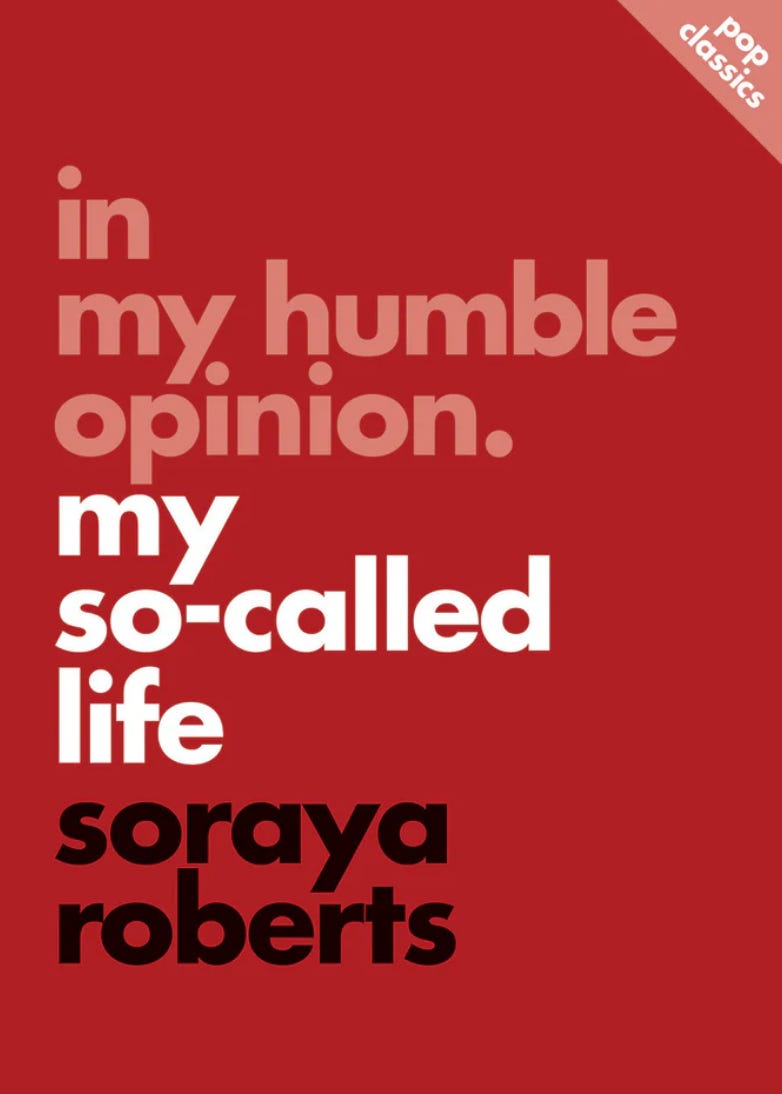
In 2016, Toronto-based writer Soraya Roberts paid a throwback tribute to it with her short, and handily small for transit-commute reading, book In My Humble Opinion: My So-Called Life. “Other shows, like Beverly Hills, 90210, were glossy, brightly coloured celebrations of Hollywoodized teen life,” Roberts relates. “The ‘adolescents’ always looked amazing and were amazingly popular and lived in amazing houses with amazing parents and went to amazing parties and dated amazing guys and it was all so exciting!”
Canada tried its own teen show, Degrassi High. But, as Roberts notes, Degrassi went too far in the other direction, ending up as an equally unconvincing portrayal of the teen years. Degrassi’s “unwavering devotion to social issues, ranging from alcoholism to suicide to homophobia to anorexia, made it seem more like a series of thinly discussed public service announcements than entertainment.”
Filmmakers Marshall Herskowitz and Ed Zwick got the initial glimmers of an MSCL idea from working on the drama series Family. They envisaged a spin-off show about Family’s daughter, Buddy, played by Kristy McNichol. Roberts quotes the writer they approached, Winnie Holzman, on how that went. Hint: not well. “‘Marshall and Ed would think of ideas for this teenage girl character,’ Holtzman says, ‘like she lied to her parents or she experiments with cigarette smoking or whatever it was – the showrunner would come back to them and say, ‘That’s not our Buddy.’ So they decided, ‘Let’s do a teenage girl but make her super authentic like everything we couldn’t do on Family.’”
Believable humans of any age are challenging to find on TV, even now, says Roberts. Too often there’s no ambiguity to them. Not so with Angela. For example, asked why she quit the school yearbook, Angela gives the irritated classic teen reply, “I don’t know.” With Holden in mind, Holzman aimed to capture with Angela “a naked quality, not a person but a feeling of freedom and bondage, shyness and fearlessness.”
As an example, Roberts cites Angela’s reaction when geeky buddy Brian calls her crush, Jordan, an idiot for not being able to read well. “‘You think you understand, but you don’t!’ she yells. ‘You just analyze everything until it barely exists!’ Then the two of them stare at each other; it’s only a moment, but at that moment Angela appears to realize she is speaking to herself, that Brian Krakow is her. And what she hates in him, she hates herself. In that avant-garde post gender moment, their similarities transcend sex.”
With low viewership—seems audiences can’t handle ambiguity in characters—MSCL only lasted one season. But, as with certain books, movies, historical conundrums (Richard III, anyone?), it’s one of those things that’s become an obsession. A fun obsession, as borne out by Roberts’s enjoyable account of it.

About the Author
Soraya Roberts explains, “I’m a Toronto-based writer who specializes in long-form culture. My first book is In My Humble Opinion: My So-Called Life (ECW Press) and I am currently working on a memoir (like everyone else). My writing has appeared in The New York Times, Hazlitt, and Vanity Fair, among others.”
About the Reviewer
Melanie Jackson is a Vancouver writer/editor. She’s also the award-winning author of middle-grade/YA suspensers, including Orca Books’ Dinah Galloway Mystery Series, and several chillers set in amusement parks. Visit Melanie at The Writers’ Union of Canada.
Book Details
Publisher: ECW Press, August 9, 2016
Language: English
Paperback: 136 pages
ISBN: 9781770413081
Nice!