
In the Shadow of Tungusuak by Chris Buckley
A true story of travel inland from Nunatsiavut’s famous coastal fjords.

While I am currently an armchair adventurer, I was, during my youth, a member of my high school's outdoor club. This club organized weekend camping expeditions and a longer canoeing trip that necessitated portages over well-travelled trails. Although we were never far from civilization, the absence of cell phones dictated that we exercise extra caution. As an adult, my wife and I frequently camped throughout Ontario —including as far north as Cochrane —and the Atlantic Provinces. There was even a winter camping trip that myself and two buddies went on. We had two days and one night, but it was enough to know that we were ill-prepared for anything longer.
Which leads me to the review of In the Shadow of Tungusuak, a compilation of two separate trips that Chris Buckley and his brother Brendan took into the area that is now the Torngat Mountains National Park, in 1980 and 2001.
“…two lunatics tackling an impossible trek.”
That is how a Labradorian author friend summed up this book. Author Chris Buckley, were he still alive (he passed away in 2020, shortly after finishing the book’s manuscript), would likely agree with her assessment. The introductory chapter is entitled “A Journey of Ignorance”. On page 12, Chris writes: “…in hindsight our wilderness education and training were in no way adequate for what we about to engage in.”
The first few chapters give us some background on the author’s life and his interest in hiking and camping. After completing an ascent of Mount Katadhin in Baxter State Park in Maine, Chris wondered what mountains further north might be like. It was then he discovered the Torngat Mountains in Northern Labrador. Back then there was no Google Earth, no online maps to consult, and very little about the mountains themselves. Undeterred, the author was firmly focussed on visiting and completing a north-south trek of the range.
This was arranged with no little difficulty, as the author was living in the U.S. and there was no easy way to obtain information about a place that was little known or explored. They contacted the provincial government of Newfoundland and received some touristy brochures, which were insufficient for their purposes. Soon, they would acquire a topographic map of the Torngats that the two brothers would pore over, planning their route.
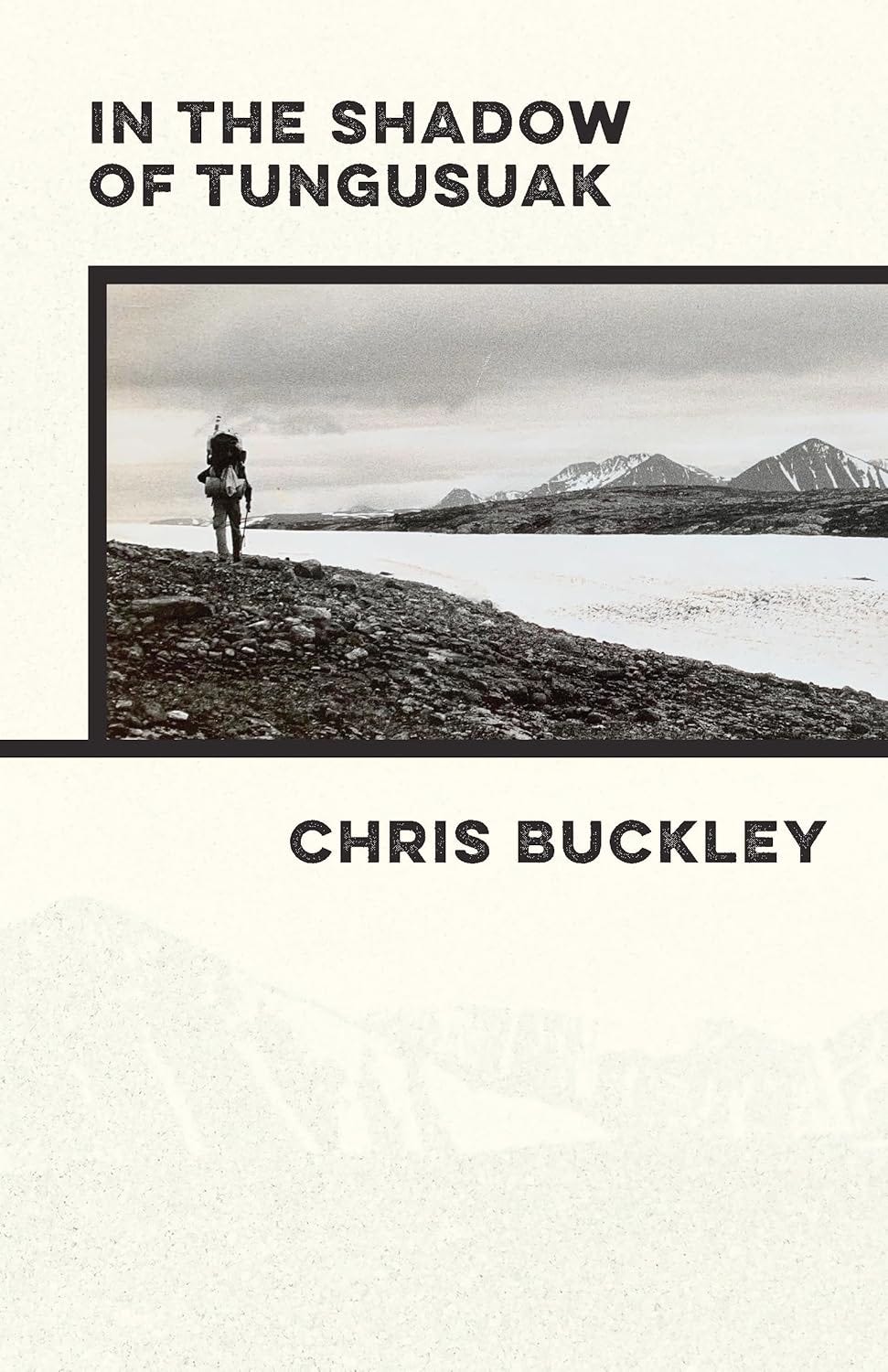
The bulk of the book flip-flops between their initial 1980 trip and their later 2001 journey through the same areas. To be honest, I found the detailed descriptions of their hikes a little tedious (aside from a few minutes of suspense as they descended a steep cliff-face or traversed a river on foot) as the book contains no images (they did take a camera) so it was hard for me, the armchair adventurer, to imagine the magnificent and awe-inspiring landscapes they were journeying through. Granted, there is a small black & white photograph on the front and back cover, but they do little to reimagine the wildness of Northern Labrador, so I’ve sourced some images from the Torngat Mountains National Park website:


“Labrador is a beautiful place, but what sets it apart, what is special about it, is its wildness. There are many places in the world with bigger mountains, more wildlife, and more unusual landscapes, but to me anyway, it’s the combination of sea and mountain, austere emptiness, unpredictable and harsh weather, and an element of the unknown that makes Labrador so appealing.” (pg. 208)
For me, the most fascinating — and insightful— parts of the book were when the brothers were confined to their tent due to poor weather conditions. Or at the finishing point of their journeys, when a return to civilization brought out conflicting emotions within each brother.
“For both Brendan and me, our 1980 Labrador expedition ranks as the most significant event of our entire lives and the singular accomplishment of which we are most proud. We were extremely fortunate to be able to explore one of the last great unknown regions of our shrinking planet, and the experience shaped and changed us in ways both subtle and significant.” (pg. 252)
This was what truly interested me, the toll on the human psyche that visiting the North has on a person. The brothers would return again and again to the Torngats, but when it was made a National Park in 2008, Chris had no interest in revisiting:
“The idea of returning to the Torngats, now part of a national park where we'd need to get permits, get training in backcountry travel and polar bear safety, and have a hired armed marksperson and guide travel with us at all times, dulls my enthusiasm.” (pg. 271)
If you are an outdoor enthusiast familiar with the Tundra or someone planning a trip to the Torngat Mountains National Park, I would highly recommend reading this book.
2024 Foreword INDIES Silver Winner, Adventure, Sports & Recreation

About the Author
Chris Buckley grew up in New Hampshire and travelled to the Torngat Mountains many times from the 1980s onward, mostly with his brother Brendan. He lectured in English and creative writing at Plymouth State College from 2002 to 2013. Chris passed away in 2020.
About the Reviewer
James M. Fisher is the Editor-in-Chief of The Seaboard Review of Books. He resides in Miramichi, New Brunswick, with his wife, Diane, their tabby cat, Eddie, and Buster, their Border Collie. James works as an MRI technologist at the Miramichi Hospital.
Book Details
Publisher : Brack and Brine
Publication date : Dec 6 2024
Language : English
Print length : 286 pages
ISBN-10 : 1778219365
ISBN-13 : 978-1778219368
Interesting. Perhaps the author felt the written word would better convey the emotion they felt, as no photo could really capture the essence of the Torngats anyway. But the photos would help us to visualize and formulate our own reactions.
Hi Anne, and others on this thread. This is Brendan Buckley, Chris' brother who was on the trips described in the book. First, Anne, are you related to Paul and Levy Nochasak? Chris traveled on Paul's boat in 1982, the year I didn't go with him. I believe Levy joined us on later trips on Henry's boat the Cape Rouge, but I would have to check our journals. Anyway, I wanted to address the lack of photos.. We do have many photos taken from our travels, though on the 1980 trip my camera overexposed nearly all photos except the odd one of the camp at Chasm Lake that is included on the back cover. The problem was the publisher did not have budget for including many photos so I am working on a new book that will hopefully be able to include them. On the 2001 trek I had a video camera and I have about 10 hours of video from that trip. So for slides we have a lot of photos of me and a ton of vidoe of Chris.