



New, Old & Notable is a recurring column by Gordon Phinn in which he concisely reviews several books from the past and present. Links will take you to the publisher’s page for more information.
You can access Gordon’s previous columns here: https://www.theseaboardreview.ca/t/new-old-and-notable
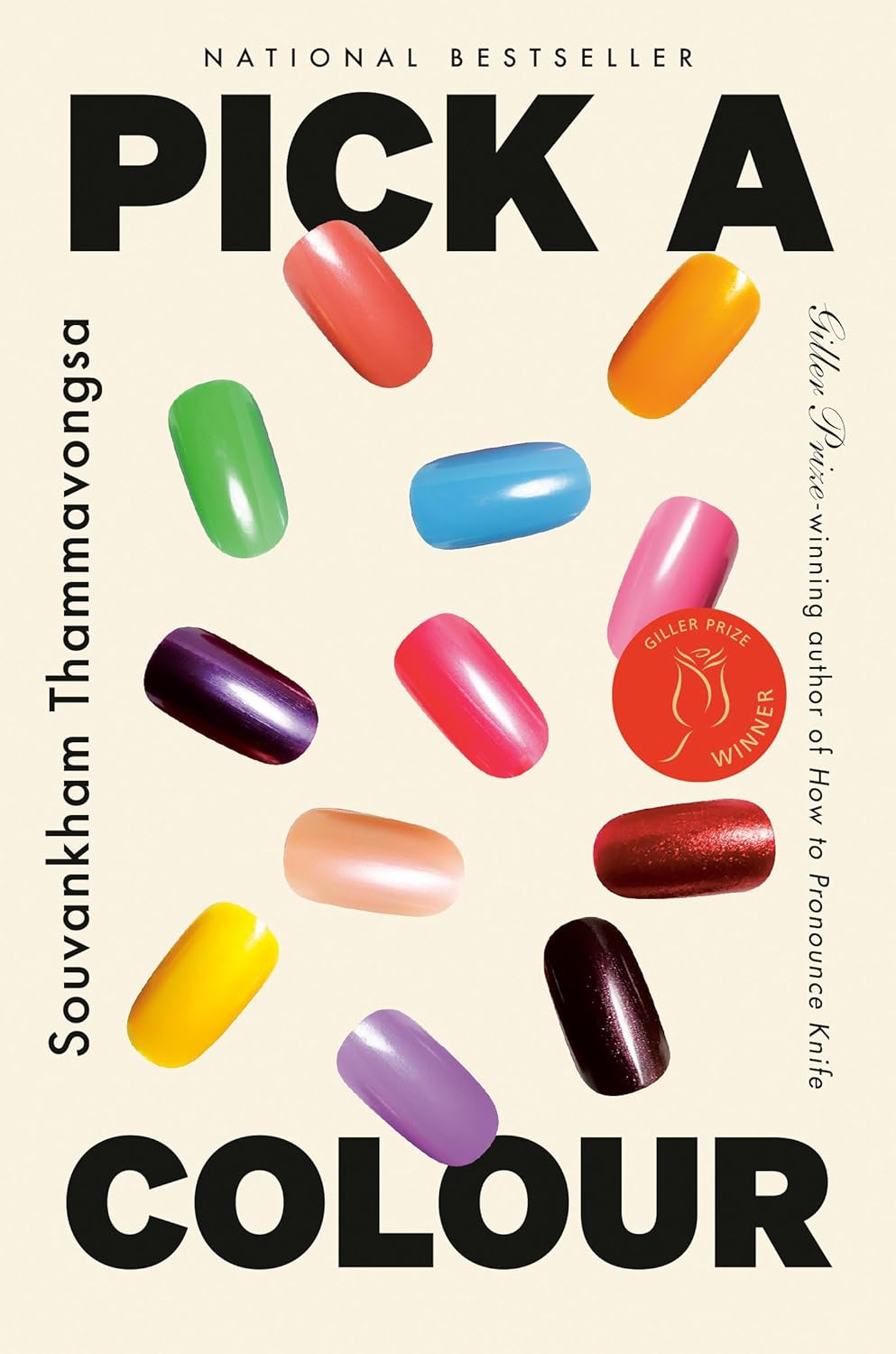
Pick A Colour, Souvankham Thammavongsa (Knopf Canada 2025)
A short novel. One day in a nail shop. Mani-Pedi, goes the mantra, just like the story in her first collection. Walk-ins and regulars. A motley crew of South Asian women. Maybe Thai, Vietnamese, Laotian, Korean. Let’s not identify, might be racist. The immigrant experience. Entry level employment. The author, supposedly the genre’s premier exponent. Giller and Trillium winner. Twice. The stories of How To Pronounce Knife. Boss girl, a former boxer. Wounded in body and psyche. The grim survivor grappling with sanity. Reorganize your pain into running the place like a sergeant major. Girls in black and identical haircuts. Do as they are told. Need the work. Come and go.
Customers as smelly strangers to be quickly expelled. Pick a colour, pick a colour. Don’t sit there. Sit here. Let us go through the motions. Let us gossip about you and your bourgeois life. Our impenetrable native tongue. Comments nasty and cruel. Resentment of perceived privilege. Smile as you slice. Invent gruesome fantasies that verge on the violent. Obsession with men, marriage, and sex. All those shifty lying eyes.
A narrative lacking in charm. Sentences shunted into place. Look in vain for semicolons or subordinate clauses. The full stop is where it’s at. Insights pedestrian or predictable. This the real world you educated naifs. Quit looking for the romance of the fond reminiscence. Boss girl was a boxer. Paces herself with the echoes of coach’s advice. Show no quarter, deck the opponent without ducking. Never be a loser. The other is not for a moment to be trusted. Clients need to be put in their place as your cheery chatter masks envy and disdain. The spit that dares not speak its name.
As one entertains the promise of exhaustion with the appalling behaviour of cast and crew one prays for acumen and a pinch of resolution, the crumbs of which fall short of satisfaction. The reader reaches the last page, hoping perhaps for a release from this pot-pourrie of wretchedness. It does come when the cover is closed, but the hungry ghosts stalk you, white boy with all the perks, for days until you ditch your jittery compliance.
Were there any insights into the immigrant experience not already exhaustively catalogued by this new generation of fictioneers our culture is anxious to include? For this reader no. These are puppets already prancing through our imaginations, provoking our predilection for guilt-based pity.


Letters To Kafka, Christine Estima (Anansi 2025)
Faithfully Seeking Franz, Elana Wolff (Guernica 2023)
Watching the recent Oscar nominated film Hamnet and seeing how writer Maggie O’Farrell filled in the blanks, of which there are many of William Shakespeare’s life, that of his wife Anne Hathaway and three children who remained in Stratford-On-Avon while he ventured to London to try his hand at acting and directing, I was reminded of the temptation all writers succumb to when the details of biography are elusive to the point of non-existence, to fill in the blank canvas with visions and details that dovetail with their hyper romantic fantasies far more than any directives or hints from history.
I recalled almost exactly the same issue with the film Girl With A Pearl Earring, whose exquisite cinematography and polished acting disguised the fact that no action portrayed could be verified historically. We know even less about the life of Jan Vermeer than we do of William Shakespeare. Supposition and innuendo are ethically insufficient, yet directors and writers point rather proudly to artistic rather than historical truth.
Christine Estima, however, is working from the posthumous letters and diaries between Franz Kafka and Milena Jesenska, many of which are very telling of the restrained passions that passed between the two often separated lovers. Her evocation of Prague and Vienna in the immediate post-war period (circa 1920/21) is affecting in part, but suffers from a bad case of overwriting, where the memes of the epoch, derived from many other portrayals, are repeatedly evoked to establish what is presumed to be authenticity. Beware, you are entering the realm of sachertorte from which, after 300 odd pages, you are afraid you might never leave. Of course with two tragic heroes, the writer destined for the early exit with his major works either ignored or unpublished, and the journalist translator, denied a life with her true love and fated to be captured by Nazis in 1940 to languish in the camps until her death in ’44, well, you can’t lose, can you? Unfortunately, the portrayal is unconvincing and the pace plodding. Much could have been achieved by some sharp, incisive editing, but I suspect the market for tragic mid-brow historical romance beckoned.
A couple of years back, Elana Wolff took a different tack. A memoir of several trips to the very locations where Kafka is known to have stayed, — guesthouses, farms, hotels and spas, it becomes a measured meditation in the presence of the past. Finding and exploring the modern-day remnants in her travels, she leaves no stone unturned in her attempts to enter and embrace the presence of Kafka’s spirit, whether left over from some brooding bundle of creative vibes, or somehow anointed by the sudden grace of his ghostly presence. There are several occasions, albeit fleeting, when a conjunction of spirits seems achieved and the term visitation can be accurately deployed.
Culture heroes, of almost any stripe, the creative artists who haunt our imaginations long after their passing with their music, words and images, tend to develop coteries of dedicated fans who will stop at nothing to capture the evasive essence of the psyches sheltering inside the daily struggles of the artistic endeavour. The mysteries of the Muses and their servants throughout the centuries serve to hypnotize the devotees as they attempt to plumb the depths. The cottage industries around Jane Austen, Sylvia Plath, Virginia Woolf, Picasso, Miles Davis, The Beatles, Mozart, and Shakespeare are but a random sample of the sumptuous variety on offer in these days of no-holds barred digital embrace.
Franz Kafka, the enigmatic Czech prose artist of the early 20th century sapped by tuberculosis until an early passing, seems to have become a fitting candidate for the sickly hero perch, perhaps just to the left of John Keats. As Wolff notes, “Of course, one can search endlessly for parallels between Kafka’s life and writing and be left guessing. Still, the speculation remains irresistible, especially when there are so many clues in the ‘private’ writings”. As a tireless researcher, Wolff explores a number of previously passed over avenues that serve to illuminate some of the shadowy corners of Kafka’s journey through family, culture, and relationship. The curious will no doubt be captivated by the lengths to which she goes.
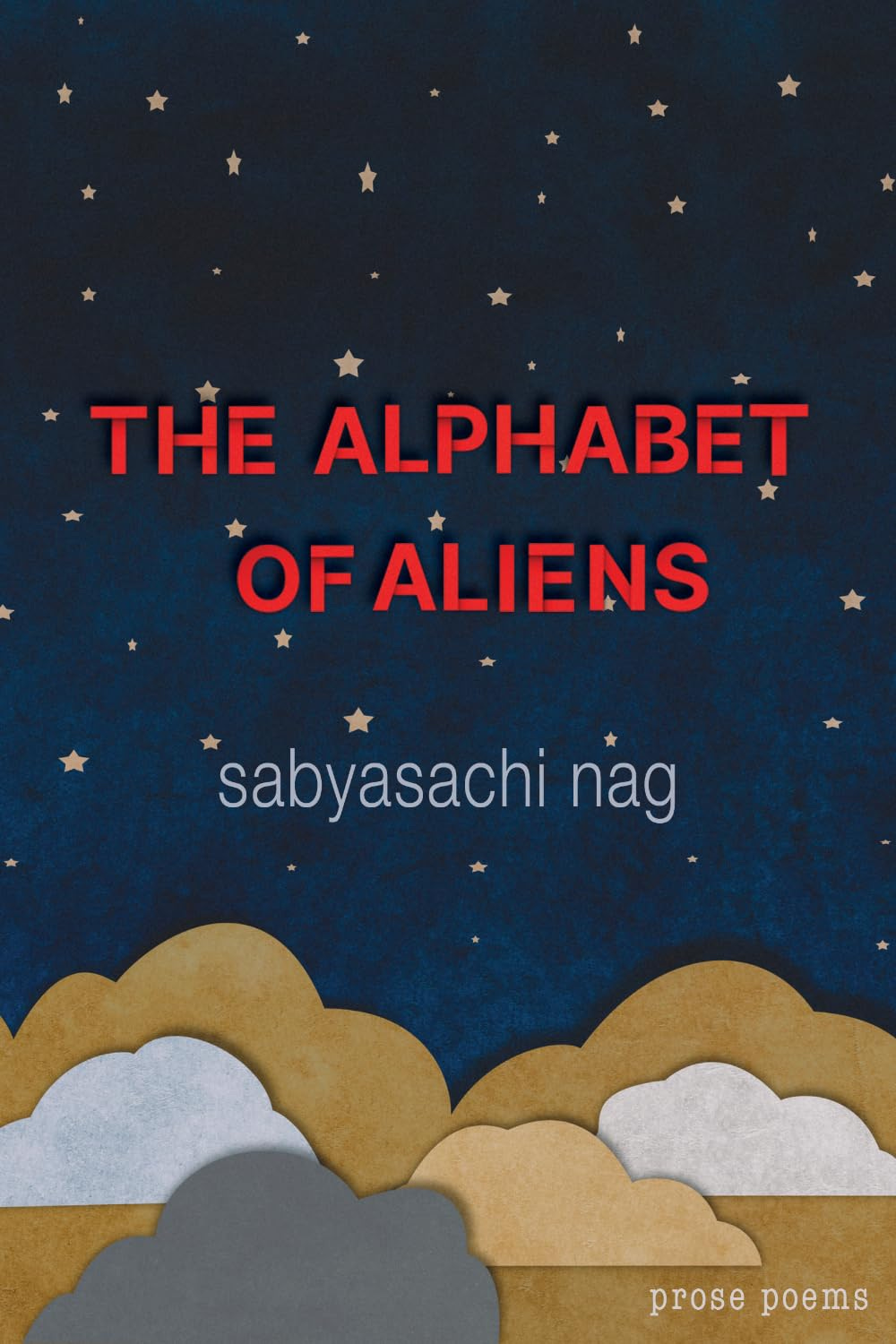
The Alphabet of Aliens, Sabyasachi Nad (Mawenzi House 2025)
This collection of prose poems, the forth from this author, shows a brimming confidence in all the aspects of ars poetica. It is a banquet of shape-shifting metaphor, constantly re-adjusting the reader’s perceptions of language and what it can accomplish in the hands of a maestro. George Elliot Clarke calls them “songs cast in ecstatic surrealism, betwixt Strawberry Fields and Desolation Row, in that space between Rilke and Ferlinghetti”.
Ecstatic surrealism for sure, it works the seam of rampant psychedelia oft revealed to mushroom experiencers, where definitions and meaning crumble at the edges, the crumbs themselves shining with a sublime significance that easily resists encapsulation. Welcome to the world of the indisputably irrational, where nothing is quite like it seems. Lovers of the surreal and fantastic will feel right at home.
We have traversed these scenarios with the likes of Wallace Stevens and John Ashbery. Contemporaries such as Christopher Dewdney, Steve Venright and Darrell Epp continue the tradition. Brief visits into the surreal and fantastical can stimulate the lyric exhausted, yet extended stays seem to impoverish the initial glamour, the very richness becoming relentless. From time to time, one finds oneself craving the simple sanity of a quatrain and the elegance of disciplined utterance. In this alien alphabet swimming through a delirium of dislocation is the norm, yet in the following we can find an expression that is discrete and relatable.
The Stopped River
By the time we returned the river had stopped. It wasn’t a failure of god alone or the ruined robes of preachers. Not the bitter acids in the partisan trench or the cinder in the sibyl’s eyes. Not the shattered spine after the steep climb or the weight of water after the centuries of gravity. It was about the manner in which the sun had set. Is there going to be nothing after this? The child was anxious.
When no one listened he posed his question again and again, his tongue wagging like an ancient church bell. When no one spoke he cried like someone who had just heard death rattle his mothers’ ruined bones. No one knew how to console him.
Then his mother asked for ink, a blank sheet, plain water. Painted a river that shone like a lamp on a rainy afternoon and licked up the pale sky. And in the river she painted blithe waves. And down the stream towards the edge of the sheet she planted a little whirlpool that moved like a furry one-eyed animal. And between the waves she planted a dark shadow of our sunk history.

Gordon Phinn, a longtime resident of Oakville, Ontario, has been active in literary production since 1975, with several titles in a variety of genres to his credit: Non-fiction, fiction, poetry, criticism and memoir. His early critical work for Books In Canada and Paragraph is collected in It’s All About Me, and his four-year reviewing stint at WordCity will soon be available as Joy In All Genres. Other recent essay collections: Bowering and McFadden, Laughing At The Universe Of Lies and Consciousness: A Primer. A novel, An American In Heaven, a memoir Moving Through Many Dimensions and a poetry collection, Winter, Spring and Eternity’s Seduction. He is currently editing a collection of essays in celebration of the work of Laurence Hutchman, to be published by Guernica in 2026.