

The Forgotten Midwife by Laura Anthony
Reviewed by Ian Colford

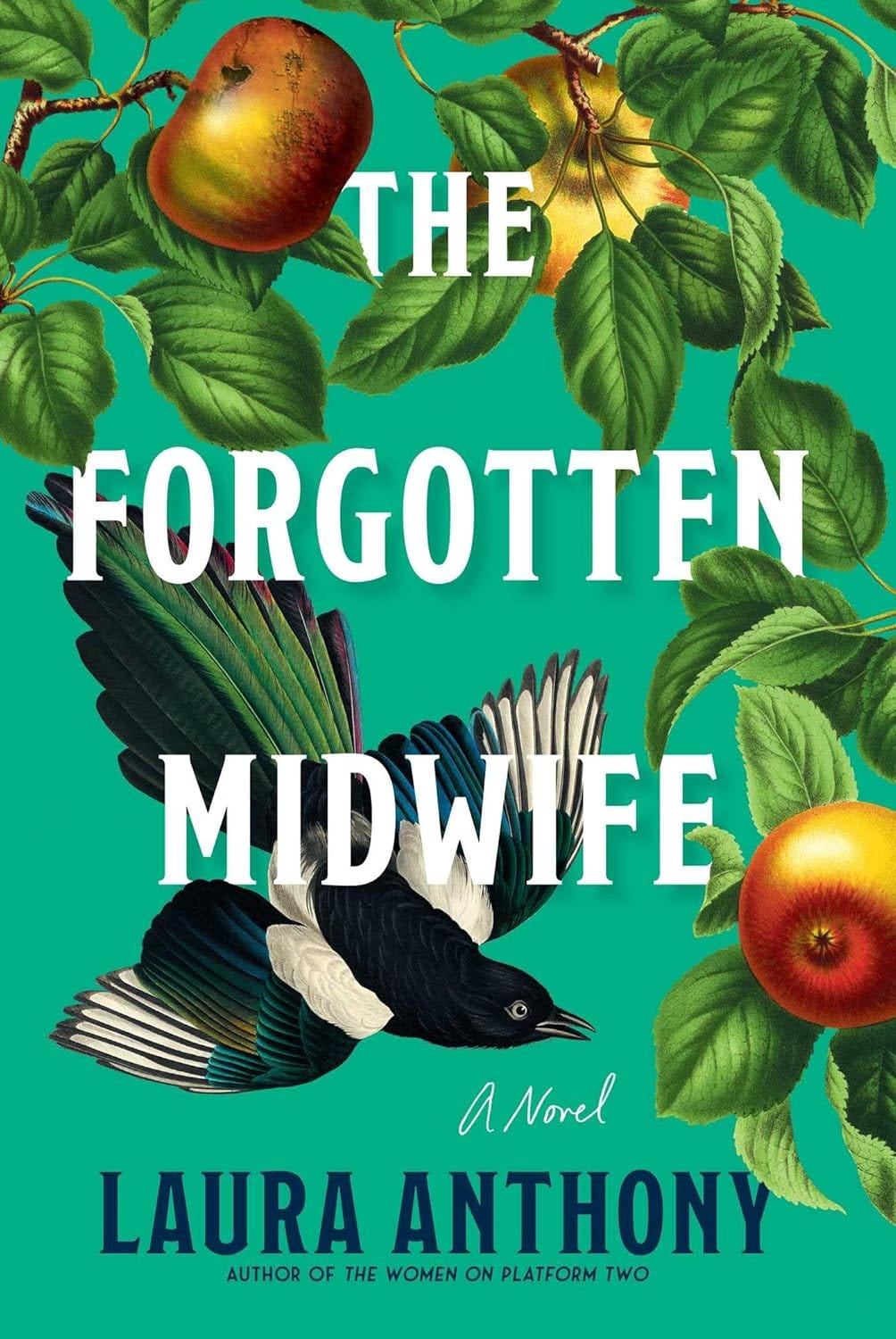
Laura Anthony’s harrowing and heartrending novel, The Forgotten Midwife tackles the shameful history of the Magdalene laundries, facilities that operated in Ireland under the auspices of the Catholic Church for over a century.
The story is narrated in two threads. In the contemporary timeline, set in New Jersey, Riley Carmichael is betrothed to Sam. Riley, keen to join Sam’s large, bustling family, regrets that her own family consists of just her and her grandmother, who has Alzheimer’s and resides in a care home. One day, in a rare moment of lucidity, Riley’s grandmother gives her a shoebox containing old documents that Riley didn’t know of, documents that link Riley’s mother, who was adopted and is now deceased, to Irish roots. This new knowledge propels Riley and Sam to Ireland searching for Riley’s Irish family.
“Margaret’s haunting tale of strength and defiance against enormous odds elicits a visceral response and, midway through, makes the book something of a page-turner.”
The historical timeline, beginning in 1956, centres on Margaret Lannigan of Tipperary. 20-year-old Margaret, a fun-loving, carefree spirit, dreams of the day she will marry her fiancé, Joseph Maloney. But it is not to be. When Margaret’s older sister, Sheila, dies suddenly, Margaret finds herself the focus of unwanted attention. It has been tradition in the Lannigan family for the eldest daughter to take vows and join a local order of nuns called the Sisters of Penance. With Sheila’s death, this obligation falls to Margaret, who, much to her chagrin, is given no choice in the matter.
Despite her protests, and without delay, Margaret is whisked off to Ballyvale Convent by the domineering Father Michaels. Life at the convent is a quiet one of discipline and solitude. Margaret misses her family and Joseph, but over several years slowly adapts to the new life that has been forced upon her. However, she is unable to quell her rebellious nature, questioning everything and always looking for ways to circumvent the rules. She is especially curious about the well-dressed couples that arrive at the convent from time to time and, after meeting with Father Michaels, leave with big smiles and a newborn baby.
The building across the road is also a subject of fascination for Margaret. It appears to her untutored eye as a second convent, though she’s been told it’s a laundry. Then, after an act of insubordination results in her being pegged as an unrepentant troublemaker by the mother superior and Father Michaels, she is transferred from the convent proper to the laundry, where she is forced without training into the role of midwife to the “fallen” girls who have been sent there by their families to await the birth of their babies behind closed doors.
This is where Margaret’s story, and Anthony’s novel, takes off. Ever the rebel, horrified by the misery she witnesses, Margaret does everything she can to alleviate the suffering of the girls, who labour ceaselessly in sweatshop conditions under the watchful eye of the unfeeling Matron whose cruelty seems to know no bounds, but whose behaviour is excused and encouraged by Father Michaels. At great risk to herself, Margaret disregards the rules yet again and connives with others at the laundry to ease the burden on the girls and save them where possible.
Margaret’s haunting tale of strength and defiance against enormous odds elicits a visceral response and, midway through, makes the book something of a page-turner. By contrast, the half-dozen or so chapters devoted to Riley’s search for her roots are less compelling, included (one suspects) only to serve as a structural bridge into Margaret’s story.
But this is a minor caveat. The Forgotten Midwife provides a vividly dramatic account of righteous and principled resistance to corrupt authority, and in Margaret Lannigan, the author has created a strikingly full-blooded, engagingly imperfect protagonist. Also, and to her credit, Laura Anthony does not shy away from the horrific details that make the Magdalene laundries one of the more shameful and sordid episodes in the checkered history of the Catholic Church.

About the Author
Laura Anthony is a pseudonym for a published author of emotional women's fiction. She lives in Kildare, Ireland, with her husband and children.
About the Reviewer
Ian Colford has published three novels and two collections of stories. Evidence was published in 2008 by Porcupine’s Quill and won the Margaret and John Savage First Book Award; Evidence was also shortlisted for the Danuta Gleed Literary Award, the Thomas Head Raddall Atlantic Fiction Award and the ReLit Award. The Crimes of Hector Tomás followed in 2012. Published by Freehand Books of Calgary, it won Trade Book of the Year at the 2013 Alberta Book Publishing Awards. Perfect World was published by Freehand in 2016 and shortlisted in the book design category at the 2017 Alberta Book Publishing Awards. In 2019, A Dark House was published by Nimbus Publishing of Halifax and was shortlisted for the Alistair MacLeod Prize in Short Fiction at the Atlantic Book Awards and the Relit Award. In 2022 The Confessions of Joseph Blanchard won the Guernica Prize and was published by Guernica Editions in November 2023. Witness, a sequel to Evidence, will be published in 2026 by Galleon Books of Moncton, NB. He lives in Halifax, Nova Scotia. More info can be found at www.iancolford.com.
Book Details
Publisher : Simon & Schuster
Publication date : May 12 2026
Print length : 368 pages
ISBN-10 : 1668241935
ISBN-13 : 978-1668241936