

The Joy of Solitude by Robert J. Coplan
Reviewed by Bryn Robinson

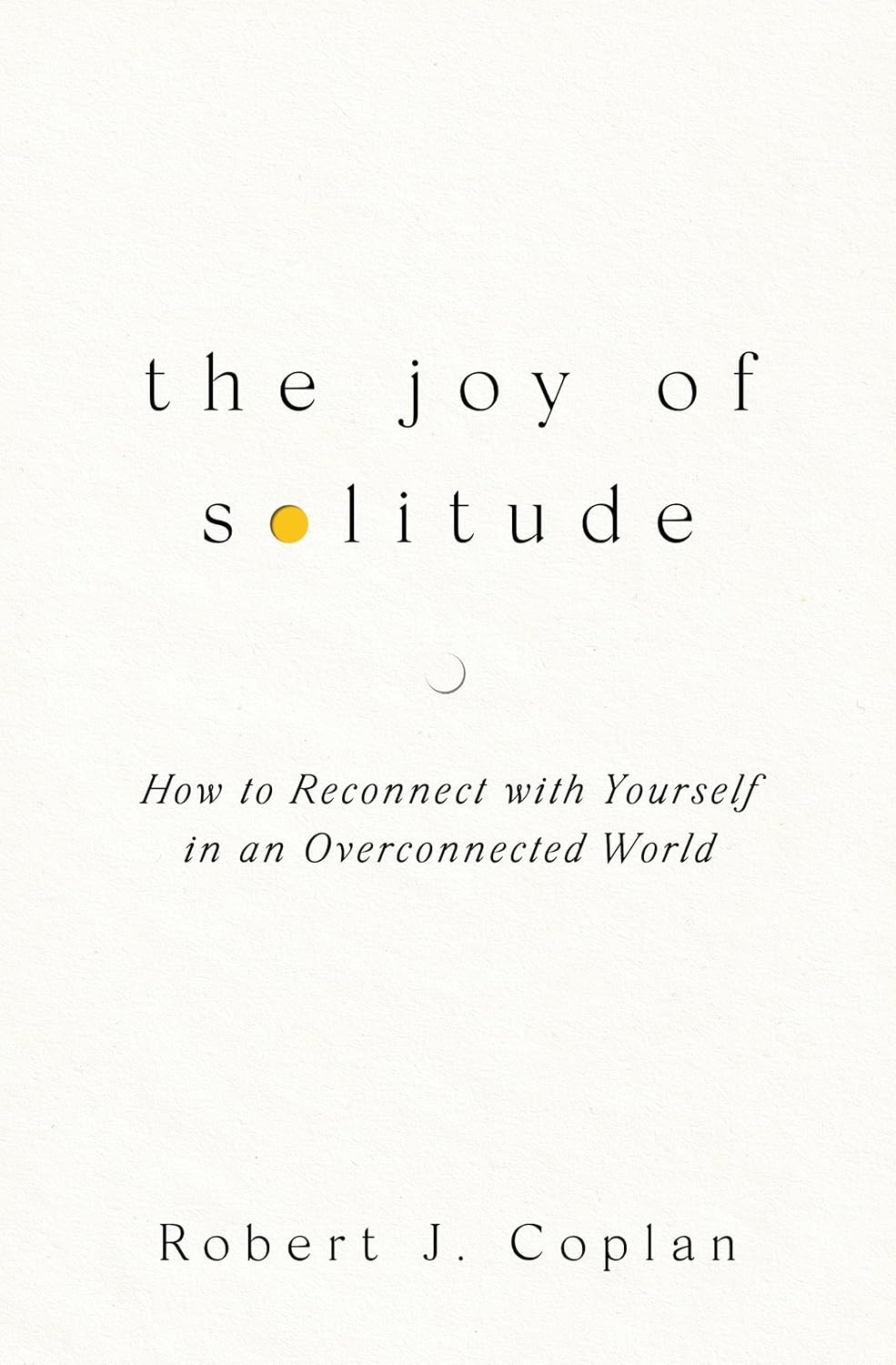
Would you rather give yourself an electric shock than sit in solitude? If not, would you be surprised that quite a few folks would?
Solitude is often painted in a negative light in a society that lauds extraversion and sociability. However, The Joy of Solitude makes a compelling case for not only the positive aspects of having alone time, but for the important role solitude has in our personal and social lives. Beginning with an exploration of the concept of solitude, the book quickly dispatches with common (and negative) views held in popular culture about alone time. While acknowledging the real, devastating impacts of loneliness on physical and mental health, Dr. Coplan proposes that aloneliness — the negative feelings one gets from not having enough solitude — can also pose significant risks to our health.
For those of us who savour quieter moments over electric shocks, this merely gives voice to what we already experience in the absence of alone time. (Shout out to my fellow early birds who love bathing in early morning reading and coffee with their loved ones.) For those perhaps more reluctant to sit with themselves, he shares research that emphasizes the nature of your alone time and the importance of autonomy in solitude (e.g., “time-outs” are punishment when imposed, but blissful when chosen — as anyone with small children seeking a bathroom reprieve will attest).
Of course, meaningful alone time can look different to everyone, and Dr. Coplan reiterates this point throughout the book. One can provide suggestions on what to do to increase access to solitude (indeed, each chapter ends with a handy summary of key takeaways), but it is ultimately about cosplaying Goldilocks and mindfully attuning to your unique needs to find what is “just right”. You might find a certain food loathsome in some applications and palatable in others; similarly, solitude in certain presentations may not be your bowl of porridge.
Following an exploration of solitude as a concept and exploring one’s personal needs, Dr. Coplan then turns to the importance of solitude within relationships — as parents fretting about their children’s time spent solo at different developmental stages, and as romantic partners. The author touches on technology and its impact on solitude, especially for growing brains (spoiler: it’s not an outright ban on smartphones, but whether technology impacts meaningful, restorative alone time), and the concept of “parallel play” as adults (c.f., couples scrolling on phones together in silence, and the recent outcrop of “silent book clubs” in public spaces).
The trick with communicating science is not just in the masterful distillation of a body of research that accurately represents the work and provides receipts for the reader, but to do so in an engaging way that steers clear of gimmicks or sermons often found in popular psychology press. Bonus points if it can be done with sprinkles of humour. Dr. Coplan accomplishes all of this. One could skip to the chapter cheat sheets or master list at the end of the book for the Coles’ Notes, but The Joy of Solitude is in guiding the reader on a mindful exploration of their relationship with alone time, and themselves.

About the Author
Robert J. Coplan, PhD, is a psychologist, researcher, teacher, and author who has been studying solitude for more than thirty years. He is a chancellor’s professor in the Department of Psychology at Carleton University. Over the course of his career, he has extensively explored the costs and benefits of spending time alone among children, adolescents, and adults. In his spare time, Robert plays piano and sings with a local band, drinks too much coffee, takes daily long walks along the water, and tries to find the right balance between enjoying the company of cherished others and basking in the calm of solitude
About the Reviewer
Bryn Robinson (she/her) lives in New Brunswick, Canada, where she uses her PhD in experimental psychology to support mental health programming in the province. She prefers contemporary fiction, narrative non-fiction, graphic novels and poetry that is emotional, reflective, and if it can do it with humour, all the better. Bryn also writes on Campfire Notebook, where she regularly features her original poetry, photography, and other art. When not reading, she’s searching for birds in the New Brunswick forests and seascapes, camera in hand.
Book Details
Publisher : Simon & Schuster (November 4, 2025)
Language : English
Paperback : 272 pages
ISBN : 9781668219225