
The Taiwo Olukorede Korexcalibur Interview
Conducted and transcribed by Kevin Andrew Heslop

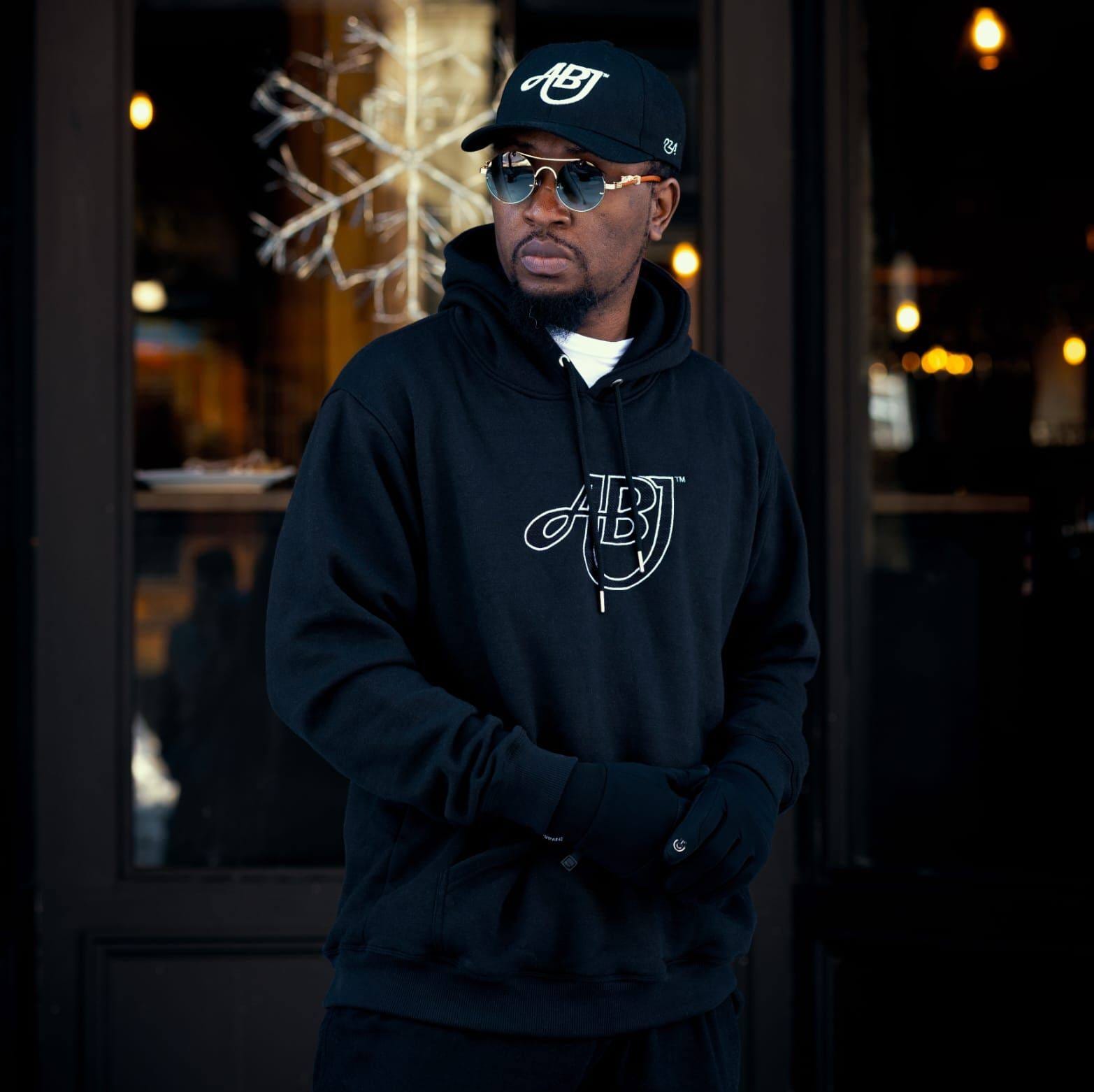
I sat down with Taiwo Olukorede Korexcalibur, the New Brunswick-based creator of a limited series distributed last month on Bell Fibe, Groove, to discuss the monolithic diversity initiatives imposed on his arrival as a Nigerian immigrant that inspired the series.
Edited with his consent for clarity, this dialogue occured on January 27, 2026.
Kevin Andrew Heslop: What’s Groove about?
Olukorede ‘Korexcalibur’ Taiwo: A comedy-drama about stereotypes, Groove follows culturally diverse students moving through a university cultural integration project.
The project starts off as a cheerful-sounding pilot program but starts to reveal itself to be a manipulative, hyper-monitored social experiment.
Forced together by this institution’s quote-unquote “diversity initiative,” the group endures things like surveillance, different kinds of challenges, hidden agendas between each and every one of them, and psychological manipulation—all while discovering that genuine integration between people with different cultural backgrounds cannot be forced; it’s something you build.
That was my goal.
When I arrived in Canada, one of the first things I encountered was being categorized as a “racialized minority.” Coming from Nigeria, that wasn’t a framework I had previously experienced. It felt like I was being defined before I had the chance to define myself.
At the same time, I was being told I needed “Canadian experience” to work in industries I had already spent years in. As a filmmaker, that raised a question for me. What does that really mean? Are the tools different, or is it about perception?
That moment sparked something deeper. I started noticing how quickly assumptions were being formed, not just about me, but about everyone.
Through my own reflection and research, I came to understand that stereotypes are often shaped by two major forces: media representation and learned behaviour.
Media plays a powerful role in linking visual identity with ideology. Over time, repeated imagery conditions us to associate certain appearances with certain narratives, often before we’ve met the individual.
The second layer comes from how societies teach us to relate to different cultures, religions, or backgrounds. These inherited ideas become embedded in how we interpret people.
What interested me was this: what happens when you put all of those preconceived ideas into one room?
That question became the foundation for Groove.
One of the most important realizations I had during this process was that bias is not one-sided. As I examined the assumptions being made about me, I also had to confront my own.
For example, I found myself questioning what I thought I knew about Indigenous Canadians. I remember having a conversation with someone who identified as Indigenous, and my first instinctive thought was: you don’t look Indigenous.
That stopped me.
I had to ask myself: why did I think that?
And the answer was simple. Somewhere along the line, media had given me a fixed image of what that identity was supposed to look like.
That moment of self-reflection became central to the storytelling in Groove. The series isn’t about pointing fingers, it’s about examining how we all participate in these systems, often unconsciously.
Media creates visual shortcuts. Linking appearance with identity, often without context. And over time, those images become internalized.
I saw this across cultures.
For example, I spoke to a Canadian of Irish descent and asked if they spoke Gaelic. They didn’t. At the same time, I was noticing that second-generation Nigerians in Canada were also losing their native languages.
Then I heard a story from a Scottish producer who had to modify his accent to integrate when he moved here.
That’s when it clicked for me: Identity isn’t just something you inherit, it’s something that gets reshaped by the environment.
What fascinated me is how these narratives don’t just describe people — they influence how people behave.
If a certain image or story is repeated enough times, it starts to define expectations.
And sometimes, people begin to live up to those expectations without even realizing it.
That’s something I’ve observed across cultures — including my own.
For instance, in many Nigerian communities, there’s a strong association between success and struggle. Hard work is seen almost as a badge of honour.
At some point, I had to ask myself: what are we actually working toward?
There’s a story I always go back to. A fisherman resting on his boat is approached by a businessman who tells him how to scale his business: get more boats, catch more fish, build an empire.
And the fisherman keeps asking, “and then what next?”
Eventually, the answer is: “then you can rest.”
And he replies: “I’m already doing that.”
That moment shifted how I think about ambition, success, and narrative.
Another major influence for Groove was a personal experience with a neighbour.
Before this person ever spoke to me, they had already formed an idea of who I was based purely on appearance.
That led to a year of tension — not because of who I was, but because of who they believed I was.
That experience made me realize how powerful assumptions can be.
And it also made me think about how this plays out on a larger scale. For immigrants, for Indigenous communities, for people who have to constantly navigate how they are perceived.
I see immigration as a long-term experiment. One with immense potential, but also real complexity.
Canada is bringing together people from all over the world, each with their own perspectives, values, and ways of thinking.
But integration isn’t automatic.
I remember speaking to students at UNB who told me they mostly interact within their own cultural groups. Even within a diverse environment, people can remain isolated.
That’s something I think Groove also explores. Not just diversity, but the gap between diversity and actual connection.
Early on, a friend from Nigeria once asked me, “How is Canada?” and one of the first things I noticed was a difference in how people engage socially. It felt like there was a certain openness in interactions, particularly in how people connected with women.
For example, when I walk my kids to school, it’s usually just a polite smile and we move on. But when my wife does the same, there’s often a full conversation—“Hello! Hi! How are you?”—a much warmer engagement. It made me pause and ask, What’s driving that difference?
I actually wove that observation into Groove. It’s a subtle moment, but it’s there.
The more I reflected on it, the more I began to see it as part of a broader cultural emphasis on empowering women here, especially compared to where I’m from. And that’s something I genuinely appreciate, because I was raised by a single mother whose strength and independence shaped a lot of who I am today.
At the same time, when we talk about immigration in Canada, there’s a strong emphasis on openness and tolerance. On being a society that welcomes people from all over the world. But with that comes the reality of navigating the nuances of different cultures, perspectives, and expectations which constitute a significant challenge to Canadians.
In Groove, I explore this through a European-Canadian character who exhibits this concept of openness and tolerance. That dynamic in itself becomes a stereotype. There’s often an assumption from immigrants that European-Canadians exist within a position of inherent privilege, but the reality is more complex. Everyone is participating in the same system—working, paying taxes, navigating their own challenges.
It raises an interesting question: if the roles were reversed, would the system actually function differently? From my experience, not necessarily. I’ve seen similar patterns across different cultures, including within Nigerian communities, where identity can sometimes shape expectations of opportunity or entitlement.
Ultimately, these dynamics aren’t unique to any one group—they’re human patterns that show up wherever people are trying to define themselves within a system.
All of these moments — the labels, the conversations, the misunderstandings, the introspection — came together in Groove.
I wanted to create something that reflects the reality of integration, not just the ideal version of it, but the lived experience of navigating identity in a new environment.
More importantly, I wanted to create something that my children could watch and feel like they belong — not as outsiders, but as part of a shared story.
Personally, I believe Canada has the potential to become one of the most influential countries in the world because of how intentionally it approaches immigration. When you walk into an immigration office and see the volume and diversity of people being welcomed, you get the sense that this isn’t a short-term policy—it’s a long-term vision.
If it’s nurtured thoughtfully, Canada could evolve into one of the most diverse and culturally integrated societies globally. You have Nigerian-Canadians, Lebanese-Canadians, Indian-Canadians, Chinese Canadians—all bringing their knowledge, perspectives, and lived experiences into the country, planting roots, and building something collectively.
I wonder whether there were other facets of Canadian culture that you notice but which people who have been habituated within it may not.
Before coming to Canada, everything I read framed it as a highly multicultural society with a strong emphasis on inclusivity and safe spaces. That was the expectation I arrived with.
But when I got here, I realized I was also carrying my own biases, especially around how people communicate. Where I’m from, we’re very direct. If someone is upset with you, you’ll know immediately. There’s no performance around it.
Here, it’s different. Someone could be uncomfortable or uninterested in engaging, and you wouldn’t necessarily know. You start picking up on subtle cues—body language, tone, pauses. It’s not in the words; it’s in what’s left unsaid. I’m still learning that language.
That difference made me feel isolated at first. Back home, when you’re new in a space, people naturally come up to you—they want to know who you are, where you’re from, what you do. There’s an immediate sense of engagement. Here, people recognize you’re new, but they give you space. The welcome is there, but the initiative is yours.
And as human beings, when we enter a new environment, we tend to observe before we engage. So I found myself in this loop of waiting and watching, while everyone else was doing the same. That’s where the isolation came from.
Eventually, I had to push past that. I started introducing myself—knocking on doors, saying, “This is who I am, this is what I do.” It’s not something that comes naturally to me; I’m quite introverted. But once I started doing that, things began to shift.
I connected with organizations like ConnexionWorks, Saint John Newcomers Centre and the New Brunswick Film Co-op. I shared my work, and that led to opportunities, a pilot project, conversations, introductions. Step by step, I started rebuilding my network from scratch.
As a filmmaker, your craft is deeply tied to your network. I had spent over a decade building relationships in Nigeria, and suddenly I was starting from zero. That reset was challenging. But the few people who recognized that and supported me early on—those relationships meant everything.
And through that process, Groove began to take shape. I wanted to tell a story about that feeling—of being in a space that is welcoming in principle, but still requires you to find your place within it.
Because Canada is welcoming. Especially at an institutional level. Organizations like Service New Brunswick, the Saint John Newcomer Centre, ConnexionWorks, and the Film Co-op understand the immigrant experience. They’ve built systems to support it.
But on a day-to-day, human level, integration is something you have to actively build.
And for me, as both a filmmaker and a parent, that became the driving force behind Groove. I wanted to create something that reflects that journey—not just for myself, but for my kids—so they grow up feeling like they belong within the community, not outside of it.

About the Author
Kevin Andrew Heslop (b. 1992, London, Canada) is a theatre-trained filmmaker and the author, most recently, of a non-fiction debut, The Writing on the Wind’s Wall: Dialogues About ‘Medical Assistance in Dying’ (Guernica Editions, 2026), as well as a forthcoming sophomore poetry collection, here lies the refugee breather who drank a bowl of elsewhere (Biblioasis, 2027). He lives abroad.
 | A guest post by
|
I am writing regarding your recent article, specifically the reference to a “neighbour” situation described as arising from assumptions and resulting in a “year of tension.”
I would like to respectfully clarify that this characterization appears to omit material context. The matter referenced involved an incident in which my vehicle was damaged. Following unsuccessful efforts to resolve the issue directly, the matter proceeded through a formal legal process that resulted in a judgment in my favour, including an award of damages. The judgment was later satisfied through enforcement proceedings.
Given that the article references a real and identifiable dispute, describing the situation primarily as a matter of “assumptions” or generalized interpersonal tension may leave readers with an incomplete understanding of the events and their documented resolution.
I recognize that the article reflects the interview subject’s personal perspective and creative work, and I am not seeking to challenge those broader themes. However, where real events are referenced, I believe it is important that reporting reflects material facts that were formally established through legal proceedings and documented facts.
If appropriate, I would appreciate consideration of a brief clarification or update noting that the neighbour dispute proceeded through the courts and was resolved with a judgment in my favour.
As someone living with multiple disabilities, I am especially mindful of the impact assumptions can have on people. For that reason, I found the suggestion that my concerns were based on appearance, rather than specific conduct, difficult to reconcile with the documented events underlying the dispute. My understanding and concerns regarding the matter were based on the incident itself and the subsequent legal findings.
I believe accountability and good-faith resolution are important in disputes of this nature, and I regret that the matter became prolonged.
I am able to provide supporting documentation if helpful.
Thank you for your time and consideration.
SB