

The Walls of Jericho by Ronald Ruskin
A Michael Greenstein Review

Hospital Heterotopias
Dr. Ronald Ruskin is in good company: in 1928 Rudolph Fisher published The Walls of Jericho, a seminal Harlem Renaissance novel; and Paul Wellman’s 1948 midwestern drama bears the same title. In his current psycho-thriller Ruskin does justice to the title by combining the pace of a page-turner with the gravitas of psychoanalytic insight. The etymology of the ancient biblical city of Jericho derives from two sources – the first (rayach) means fragrance or scent from local palm and balsam trees, while the second (yarayach) refers to the moon. Ruskin offers a pine and palm atmosphere of contemporary and ancient Jericho as the narrative traces the scent of mysteries surrounding society, and the madness or lunacy of lunar attraction and repulsion in civilizations. Fittingly he quotes from Michel Foucault’s Madness and Civilization in the epigraph to his novel: “On all sides madness fascinates man … by a strange paradox, what is born from the strangest delirium was already hidden like a secret, like an inaccessible truth, in the bowels of earth.” Probing strange paradoxes, The Walls of Jericho fascinates the reader and exposes hidden truths through an archaeology of the mind. From the innards of the earth to the moon’s madness the novel shines lights on many secret sides.
Hospitals provide a dominant setting in Ruskin’s fiction, and Foucault uses the hospital as an example of heterotopia or “other place,” which is both inside and outside of society, a site that challenges and investigates spatial and psychological norms. Situated partly in hospitals, this novel interrogates the walls of these institutions as well as psychoanalytic rooms and archaeological digs where civilization and its discontents co-exist. Moreover, these walls are porous, allowing for the penetration of external forces that disrupt their routine by excavating crevices to arrive at an existential abyss. Through their panoptic powers of observation hospitals control the patient from bedside screens to security cameras and surveillance drones that monitor all sides of the unseen. Perceptively and empathetically Ruskin diagnoses Foucault’s heterotopia.
Like these spatial settings, the novel’s time scheme is both bound and liberated according to narrative frames and a diary-like chronology, a pendulum that oscillates between various months, years, and centuries. The novel opens precisely at 10 AM on February 3, 1991, and the narrator punctuates his patient’s post-traumatic state of mind in abrupt, simple sentences that convey the confusion of Leila Elfassi, a six-year-old who has been injured in a car accident that kills her mother. “Leila awakens in a white room, her eyes and body leaden. Her head throbs. Her mouth is parched. Everything is strange. The bed is not her bed. The room is not her room. Beside her a window exposes a white expanse. Rolling hills of snow.” The narrator applies a stethoscope to his patient’s psyche and exposes her condition in the staccato prose of a page-turner, the twitch and swerve of sudden changes in time and place from northern Ontario to Montreal, Paris, New York, and Jericho as accidents recur and contagion rages. Foucault’s strangeness mingles with Leila’s. Her white room expands to the snow outdoors, contrasts with the black ice of the accident, and draws attention to the writing process of black ink on blank page of mind, memory, and diary-like entry. In turn, the black-and-white colour scheme extends to flashes of orange that accompany Leila’s mind “bruised by a dark unknowing.” The script of the psyche penetrates and fenestrates the walls of the Pine Ridge Retreat in northern Ontario where Leila’s father Raffi works on an obscure asylum project.
Ruskin deftly and subtly juxtaposes the opposite settings of the wintry asylum in the north with the desert heat of Jericho. It is minus 18 degrees Celsius in Pine Ridge: “The brutal arctic air has left an icy pattern like palm fronds obscuring the hospital window.” That pattern appears in Jericho – “the city of palms with its oasis, underground springs, and huge walls.” Strange yet familiar, Jericho echoes Foucault and northern Ontario, doubling and reversing identities. Leila (whose name means “night”) lies in hospital between shadow and light, a chiaroscuro of consciousness, often in the fog of a fugue state or twilight zone until she eventually sees the light of day.
The narrative backtracks six months to July in Jericho where Raffi’s cousin Marwan is in charge of an archaeological dig to uncover a lost account of Jericho that may be blasphemous; this excavation of Tell es-Sultan is in disputed territory between Israeli and Palestinian demands, another kind of heterotopia with its walls and boundaries, a limbo site of past and future extinction. Jericho is the place where civilization and language began, where nomadic hunter-gatherers became an agrarian society. Dr. Marwan Awad discovers a stone chronicle with Egyptian, Greek, and Aramaic writing. He phones Raffi and his wife Sarah (a psychiatrist-linguist) in Montreal to visit the site and interpret the stone, which speaks of a natural disaster and does not mention the biblical Joshua. “The text says a contagion,” and indeed the novel is contagious, touching together many levels of dissociative and associative processes at every turn of the page.
The narrative pendulum returns to Pine Ridge where Leila’s eyes open to gaze at a silver bracelet with a snake devouring its tail. As important as the talking cure in the novel, the visual dimension hints at a looking cure to complement the third ear. The ouroboro or snake points to circles and cycles that recur in the novel’s structure, while the image of Leila “falling with the blinding snow, waiting to hit the Earth” prepares for the novel’s final ambiguous sentence: “The bright light heads downwards, spinning madly to the Earth.” Within these apocalyptic moments, the events of September 1991 are included when many New Yorkers “disappeared from the face of the Earth.”
On the airplane to the Holy Land Leila plays her favourite game, “I spy with my little eye,” for the novel is concerned with various form of spying, and with the contrast between the child’s micro-vision and a broader macro-vision in society at large. In the middle of turbulence “the plane drops like a stone,” subjected to the novel’s gravity and stonework in Jericho. Precocious Leila spies everything with her little eye yet remains blinded in her post-traumatic state: “a child who started reading books at the age of three, she possesses vigilant eyes and ears, is relentless in asking questions.” She transfers these questions to her father’s friend in New York, Marc Toledano, another psychoanalyst who works with Leila to uncover the truth about her personal past as well as a contagious mental disorder that plagues society.
At the archaeological site Marwan explains to his family the meaning of the Jericho Stone with its carved circle surrounding three scripts in the form of a raised serpent devouring its tail: “The serpent represents the cycle of life.” In turn this archaeological ouroboros vies with medical serpents, the rod of Asclepius with its single snake or the double-snake Caduceus. Whether in circular or spiral form the serpent may heal or poison. Ruskin’s double-edged diary continues to oscillate between the extreme heat of Jericho and Pine Ridge’s excessive winter. His bipolar landscape veers from the depths of the archaeological dig to the summit of Pine Ridge: “On a clear day, if you climb the summit, you see the lake, the town, and, at the far north, a huge crater where a heavenly body fell to the Earth eons ago, destroying all life.” Whether in Jericho or Ontario, history repeats itself in the rise and fall of geology, archaeology, and psychology. Island bridge, lighthouse, and walled asylum form a heterotopia, a fixed yet roaming site that eventually leads to Leila’s insight. Much like ancient Jericho, the Retreat is a city in itself, subject to destructive forces.
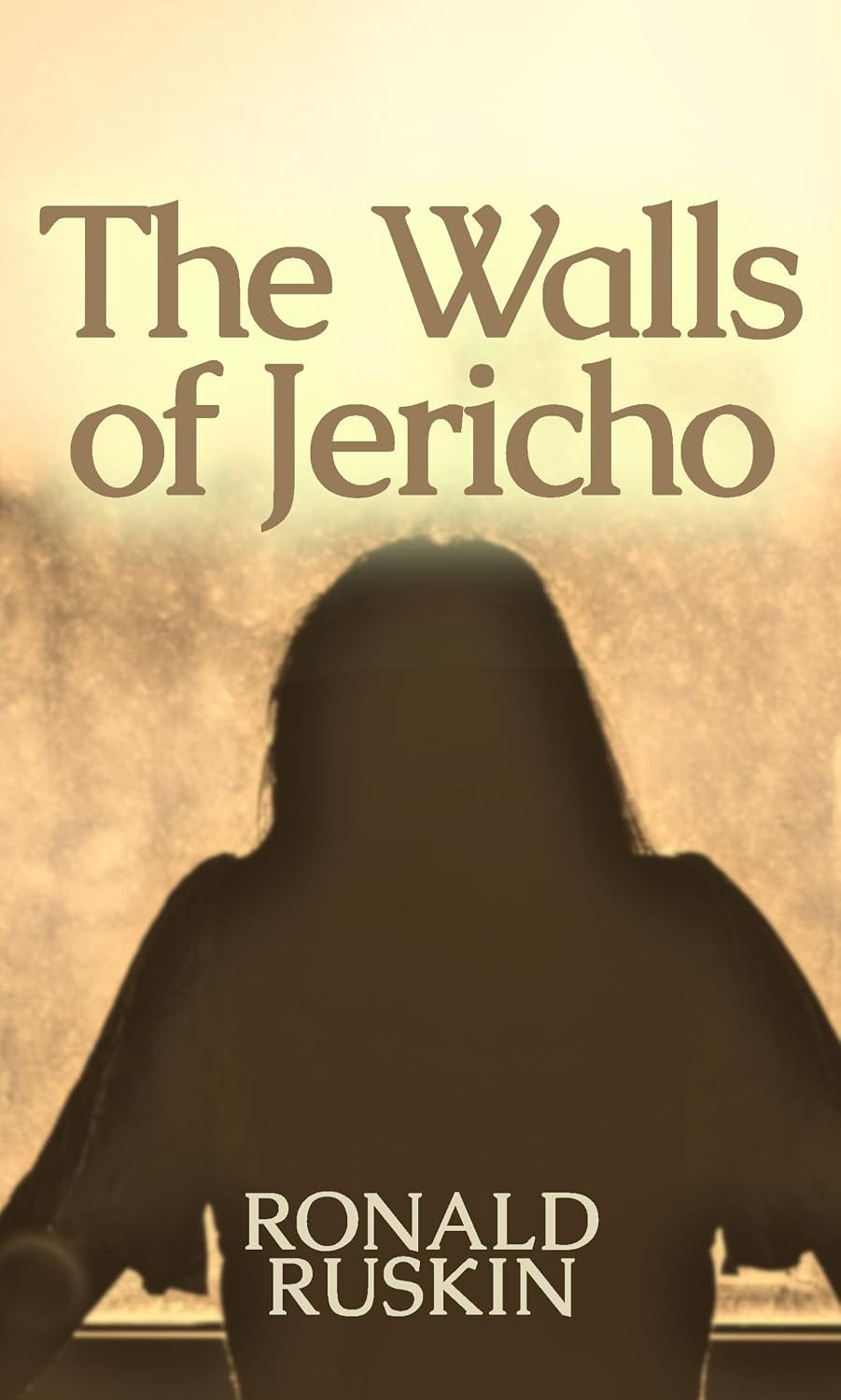
“Part One” ends with Toledano visiting Pine Ridge, and in the rest of the novel he plays a prominent role alongside Leila. “Part Two” begins in New York City on February 2, 2004 as Leila limps to Toledano’s office on the Upper West Side. Toledano serves as a surrogate father: like Raffi, he is a widower, having lost his wife Alma (soul) in the attacks of September 11. “Leila sees his sad amber eyes … like her father.” Toledano’s silk tie contains a pattern of tiny orange fish, which swim toward Leila’s own mysterious orange light and are explained near the novel’s end. The narrator spells out this colour code to tie together various strands: it is the colour of the sun and of hope. “The color of caution in a traffic light. The color of snowplows in Pine Ridge. The burnt orange warning of sandstorms in the Middle East. The color of sweet Jaffa oranges.” The colour of fire and fish on Toledano’s tie, “the color on painted stripes on trees to indicate boundaries which must not be crossed.” Multicoloured orange makes its way to the book’s cover with its mysterious haze of a charcoal female figure gazing out at an amber horizon. The palette extends to the orange toque of the Edmonton Oilers worn by Boris Ragin at the time of the accident. Boris the loving villain and double agent who teaches Leila the Russian language, how to skate and play chess. Toledano recalls Boris as “an odd fish” who swims against the current of the orange fish – different schools, different strokes in the world of psychiatry. Boris jokes about chess and hockey, both games of war meant to crush the mind and body of the opponent.
Like Freud, Toledano has an archaeological fetish, lining his office with ancient relics and artefacts, terra-cotta figurines and stone carvings. Leila notices his wall replica of the Jericho Stone: “The wall replica. Something out of place …” Then she realizes that nothing is out of place except herself. Like the physiological condition of heterotopia where normal tissue travels to an abnormal location in the body, the novel raises the question of what is out of place – character or society migrating into madness. In this clockwork orange, the novel traverses points of the universe to arrive at Toledano’s world of travel recorded by his fountain pen flowing in illegible script. When Leila asks him what he is writing, the narrator responds with “Black ink. A flowing script.” A clipped conundrum that flows through the novel, black on white stasis and flow across a clipboard and diary of events. In the give and take between Leila and Toledano she asks why “shrinks’ offices are stuffed with relics,” as if they are “tomb-robbers.” As she examines the wall replica of the Jericho Stone with its three ancient scripts, he opens an ink-bottle, “jabbing the nib into the deep blackness filling his pen.”
When he is not at work, Toledano jogs around Central Park, circling the reservoir. He explains the history of Jewish flight from enemies. “We ran to the New World. Running comes naturally for my kin … As Jews, we run for our lives.” Jogging and jotting notes form two parts of narrative flow – the jab of the pen and running commentary. “As he jogs, he thinks of Aliyah and Leila. The names run together like a palindrome in his thoughts.” This running reversal between Aliyah, a murdered nurse whose name means “ascent” in contrast to her tragic downfall, and the fall of light in Leila’s nighttime name, lead to another palindrome of Axel Lexa, who is the double agent X, Boris Ragin. Consistent with forms of blindness in the novel, Aliyah’s eyes are plucked out in a tragic attack worthy of King Lear. Toledano’s personal running aligns with historical patterns of migration and hospital heterotopias from Montreal to Manhattan. Furthermore, this running trope serves as an intermediary between associative and dissociative aspects of the novel – a counternarrative that mirrors and inverts time and place.
During his run Toledano falls and injures his leg, which sends him to Maxim Pasternak, a sports physiotherapist who acts as a counterweight to all of the psychotherapy, as massage displaces messages of the subconscious. Having fled Russia in yet another migration, he uses his hands to heal: “His big hands slip over calves, around knees, and scramble up a thigh. Thick powerful fingers probe Toledano’s muscles.” Where Maxim’s client probes the psyche, he prods muscles to prevent pain from spreading. Maxim recommends training shoes to support Toledano, the expert in trauma. As omniscient as the narrator, they both have access to secrets of mind and body. In Maxim’s words: “When I press their body, it is a button to a secret compartment; they open up.”
After Toledano leaves Pasternak’s office, he sees graffiti on a building, the initials DA, the tattoo letters of the man who killed Aliyah. These letters belong to a pattern of protest, a choreography of chaos in postmodern society where a psychic plague mingles with Covid. Marc Toledano sees signs on a dumpster: “The first sign is painted. Ominous letters in a triangle. DA. The second sign, a white star against a black square.” That design belongs to a white supremacist group Stella Alba, which also calls attention to Cormac McCarthy’s psychiatric masterpiece Stella Maris.
Disordered patients slowly spiral upwards and out of control, held in check by the novelist’s control over events in hospitals and archaeological dig. “Borders and frontier walls of the Middle East are porous,” as are narrative sequences between heterotopic sites. Marwan uncovers a bronze statue of a bull; Armando (warrior) Diaz, chief at the Manhattan Central Hospital, is addicted to Red Bull, his high energy and efficiency drink; and Leila’s son Nathan has a tiny bronze bull replica, which replicates past and future generations. In his dreams Nathan sees a bright light from the sky, a forerunner of the apocalyptic ignis fatuus at the end of The Walls of Jericho.
Leila’s silver bracelet contrasts with the yellow wristlet worn by patients at the Retreat as part of a monitoring system in the colour code which links a series of events. “The events seem disconnected, derailed. A train, wrecked, gone off the tracks.” The narrator in Marc’s mind connects facts and corrects tracks. DA is another instance of reversal and wrong direction: “Twisting letters spiral to Democratic America and American Democracy. DA in reality is a reverse of democracy.” It is also a reversal of AD in Armando Diaz’s controlling name, as well as the historical frame following BC (rather than BCE and CE). “Identities and locations switch, like shapeshifters in a game.” The favourite game of I spy shifts heterotopias towards dystopias. Events spiral out of control, and Leila’s head continues to spin along with the mind fog of trauma. In the hierarchy of psychiatry Toledano needs a new pair of eyes and seeks advice from Otto Lowenberg, his old supervisor. Otto’s diagnosis: “Our world is gone blind, falling into darkness.”
Another favourite game is chess, which Boris teaches: “He plays against himself. He is black and white, he says. To know our limits, we play against our dark side.” His partner Simon teaches Leila piano, its black and white keys providing further music to colour the heterotopic counternarrative of limits and off-limits. Boris is a puzzle, a Russian doll, a story within a story, Pasternak’s patient X with a twisted spine, the backbone of the book. Leila remembers cleaning Boris’s house and finding a black spike in the flower beds that contains a paper with Cyrillic letters and numbers. That cryptic alphabet gets spelled out in the Greek words of anxiety and fear in Jericho and in the secret Russian code in Pine Ridge.
Just as Leila begins to uncover the truth about her trauma, so Marwan finds a crack in the wall of a second chamber in Jericho. He “inserts a dual-lens endoscope into the crack,” and spies clay tablets and scrolls. Earth is cracked and the writing is on the wall of the novel’s dual-lens scope. The endoscope snakes through its own self-consuming symbols where Jericho destroys itself. In another generational link Leila’s grandmother answers her question about the walls of Jericho: “They are barriers, boundaries, to separate what is outside from what is inside. A wall is a human skin.” These walls define some of Foucault’s heterotopias that may require a dual lens to get under the skin. Her grandmother gives her a necklace, the hamza, to protect her against the ambiguous light falling from the sky: it may be a ray of hope or a missile headed for destruction of diverse heterotopias. It is probably also Foucault’s “archaeology of knowledge” shedding further light on The Walls of Jericho.

About the Author
Ron Ruskin is a Toronto writer and psychiatrist-analyst. He is the author of The Last Panic, a medical thriller, and the tragic-comic novel The Analyst Who Laughed to Death. Confessions of a Medical Student was released in September 2018 by Sphinx Books. Ron is a founding editor of Ars Medica, a medical-humanities journal, and has published over forty-five stories in literary and medical journals. He has co-edited texts on psychotherapy supervision, as well as on humanities and medicine, such as his 2011 book Body and Soul.
About the Reviewer
Michael Greenstein is a retired professor of English (Université de Sherbrooke). He is the author of Third Solitudes: Tradition and Discontinuity in Jewish-Canadian Literature and has published extensively on Victorian, Canadian, and American Jewish literature.
He has published over 300 essays and reviews in books and journals across Canada, the United States, and Europe.
Book Details
Publisher : Sphinx Publishing
Publication date : June 16 2026
Language : English
Print length : 270 pages
ISBN-10 : 191595276X
ISBN-13 : 978-1915952769