

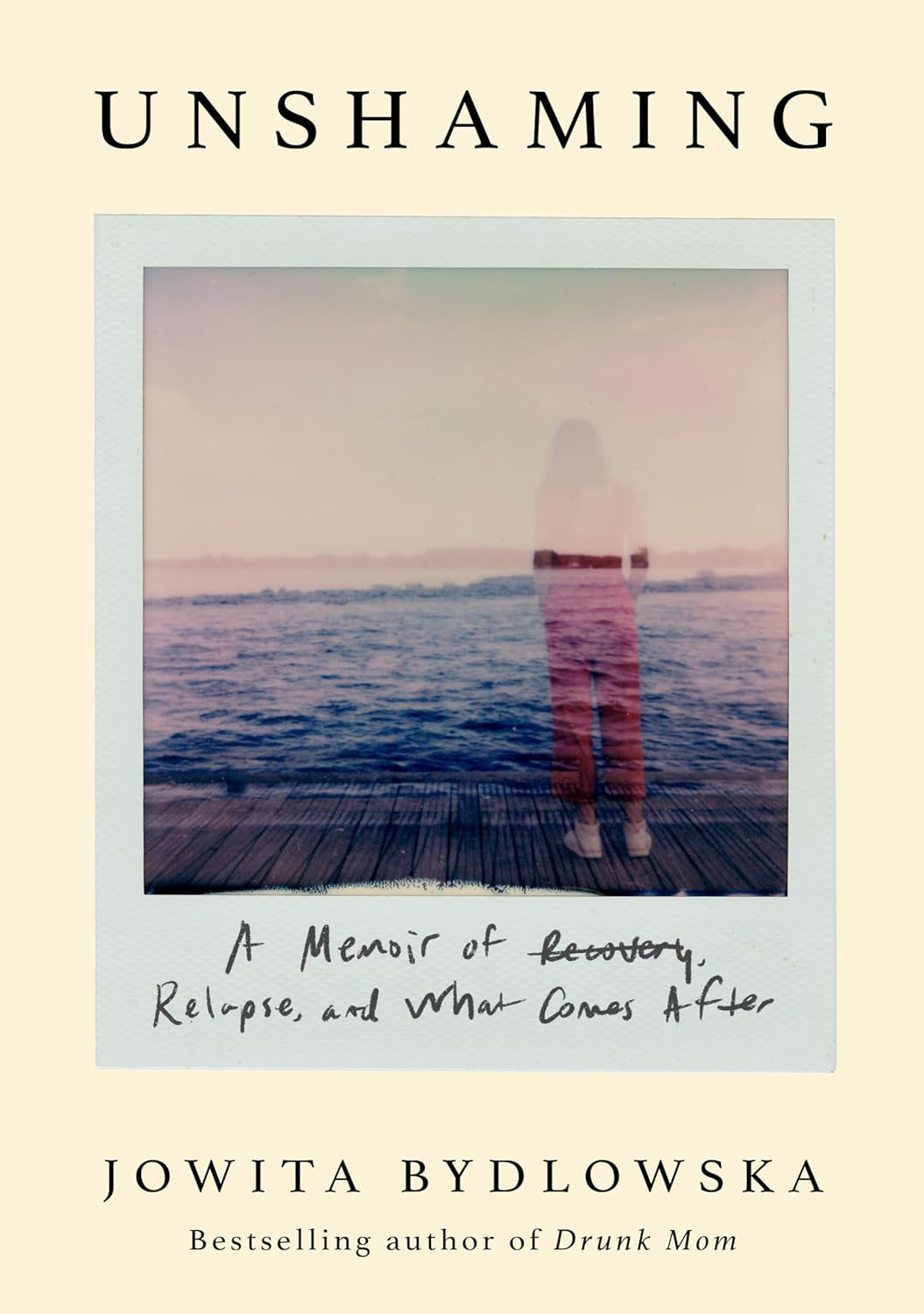
Unshaming: A Memoir of Recovery, Relapse, and What Comes After by Jowita Bydlowska
Guest Review by Chris Reed

THE TROUBLE WITH HAPPY ENDINGS
More than a decade ago, Jowita Bydlowska’s memoir Drunk Mom made her, as she later put it, “the poster girl for sobriety.” Her follow-up, Unshaming: A Memoir of Recovery, Relapse, and What Comes After begins by undoing that role. Bydlowska relapses, crashes her bike, and incurs crushing dental bills. “A nice addiction story allows a bit of room for a relapse,” she writes. “But a repeated relapse is a lot less cute.” It is a bleakly funny line, and a telling one. Unshaming is less interested in what comes after a happy ending than in why addiction narratives are supposed to have one in the first place.
The aftermath of the accident reveals an X-ray of shame’s mechanics. Bydlowska is overwhelmed with guilt as she sees donations rise on her GoFundMe page. “I didn’t lie about my injuries but I whitewashed my dirty story,” she writes. “In it, I’m a victim of terrible luck and a few bad decisions but none of them corrupt, which is how we see drinking too much—as a moral failing.” What she captures here, with unusual precision, is the pressure to narrate relapse in terms the culture already knows how to process: confession, remorse, damage, repentance. What it has less patience for is the messier, more destabilizing truth.
“Bydlowska traces the shifting boundary between secrecy and confession, between the public image of recovery and its far less orderly reality.”
From the accident on Toronto Island to a difficult visit to Poland, the uneasy launch of her 2022 novel Possessed and a return to Poland, the book remains restlessly in motion. Bydlowska traces the shifting boundary between secrecy and confession, between the public image of recovery and its far less orderly reality. “That’s how it is living with Shame—it makes you feel as if you’re pretending to be someone you’re not,” she writes. “This constant anxiety about being found out is a vicious emotional drain.” She lays bare the exhausting split shame creates between lived experience and performed selfhood.
What grounds the book is its tactile honesty about the daily textures of addiction and recovery. Bydlowska is especially good on the destabilizing boredom that can threaten sobriety, and on the strange nostalgia that can attach itself to self-destruction. Her imagery can be brutally vivid—she imagines “teeth spilling out like Chiclets from ground-meat lips”—but it can also turn unexpectedly light, as when she takes in the “chatter of sun-tired beachgoers in flip-flops” at a restaurant.” That tonal range keeps her account from lapsing into solemnity or self-mythology.
Parenthood sharpens the stakes. Bydlowska writes perceptively about how trust is built, eroded and tentatively restored, and about the way shame moves through family structures as much as through individual lives. Yet, she resists turning these scenes into lessons in redemption. What she is after instead is emotional accuracy: an account of relapse that neither excuses nor moralizes, and that remains alert to the wider scripts shaping how women are expected to narrate suffering.
If Drunk Mom turned Bydlowska into a symbol, this book restores her as a flesh-and-blood writer: severe, funny, unsparing and sharply attuned to the false notes in even our most enlightened stories about addiction. It resists the comforts readers often seek from memoir, such as closure, uplift and redemption. Instead, it offers an uncommonly frank account of relapse that refuses to flatter either its subject or its audience.
Shame sits at the heart of addiction, yet it remains strangely difficult to speak about directly. Too often it is hidden behind euphemism, moral judgment or silence. Bydlowska deserves credit for pushing that conversation into the open. In a cultural moment that still prefers stories of damage redeemed by triumph, Unshaming asks for something less comforting and more humane. It prompts us to look without turning a life into a lesson.

About the Author
Jowita Bydlowska was born in Warsaw, Poland, and moved to Canada as a teenager. Her work has appeared in various publications, including Salon and the Huffington Post. She lives in Toronto, Canada, with her son and his father.
About the Reviewer
Chris Reed is a freelance book publicist and occasional book reviewer living in Toronto.
Book Details
Publisher : Signal
Publication date : March 10 2026
Language : English
Print length : 280 pages
ISBN-10 : 0771020678
ISBN-13 : 978-0771020674
 | A guest post by
|
An insightful review that reaches the heart of the issue being addressed. This book seems to deal with the ongoing struggle addiction brings-- I find myself thinking of Richard Wagamese's "For Joshua."