

Where They Stood: The Evolution of the Black Anglo Community in Montreal by the Black Community Resource Centre
Reviewed by Samantha Jones

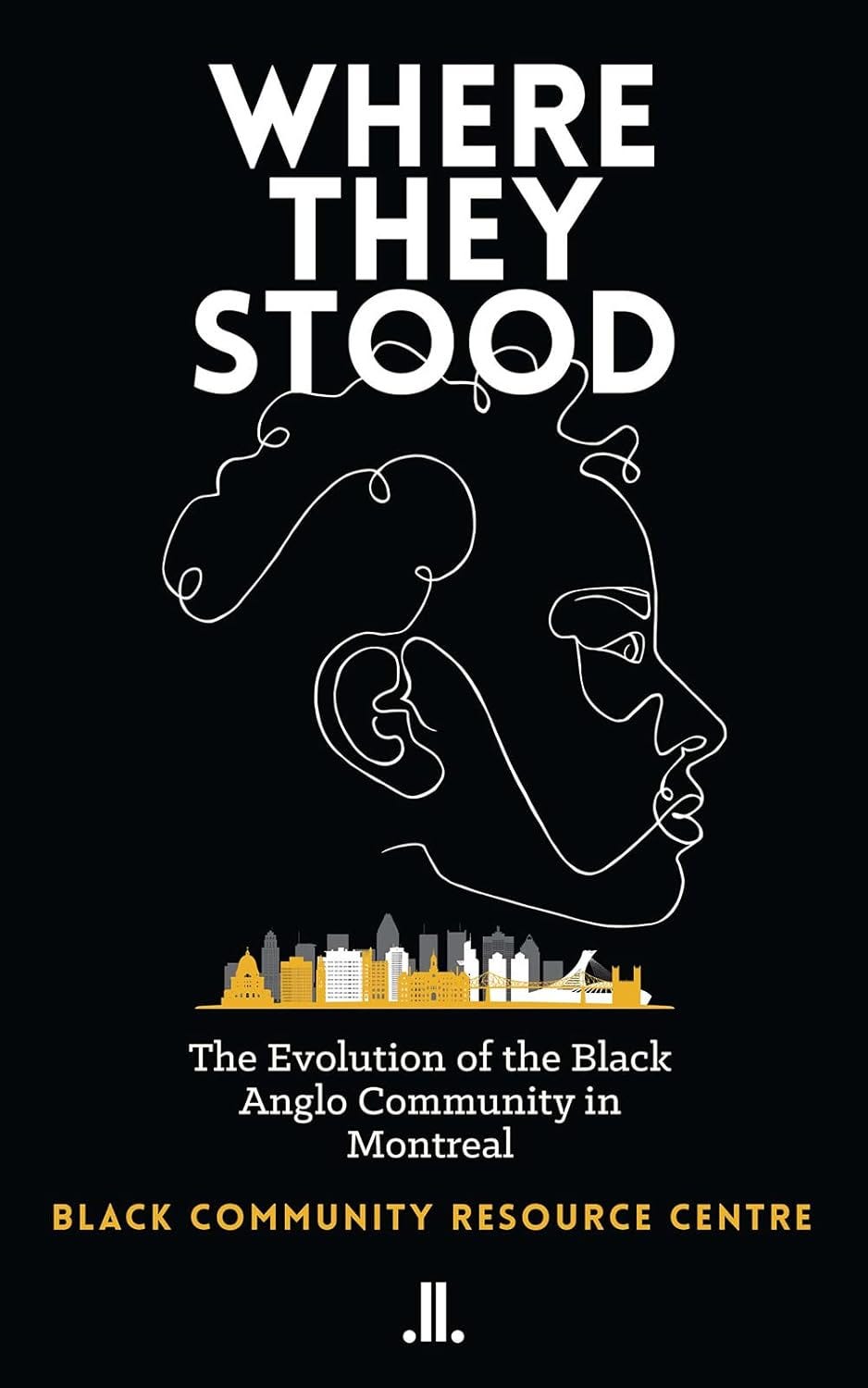
Where They Stood is a collaboration between young Black writers, the Black Community Resource Centre in Montreal, Quebec, and the broader community about the history, present, and futures of English-speaking Black Montrealers. Each chapter is written as an essay that examines people, groups, events, or movements anchored on a particular period or theme. The chapters document the unique histories, achievements, and challenges faced by the Black Anglo Community in Montreal and position them within broader societal and political contexts. The book’s organization follows a trajectory from past to present, though it is notable that many of the past struggles have direct relevance to current ideologies and systems of oppression. Important elements of Canadian Black history and their connections to Black Anglo Montrealers are covered; for example, the arrival of formerly enslaved people to Canada from the United States, the practice of slavery in Canada (an often glossed over or omitted reality), military service contributions of Black people, labour history including the unionization of Black railway porters, the achievements of Black women, more recent waves of immigration, and social movements advanced by community and faith-based organizations.
The importance of gathering is emphasized throughout the book, whether it be through organic social networks or through groups with organizational structures. People have sought out connections with likeminded folks throughout the history of Montreal, and into the present day. Examples of community coming together anchored on culture, food, faith, labour, and shared values are described along with historical contexts including links to immigration, civil rights, labour action, and more. Obstacles to community building and collective power are also described, for example, the gentrification of Saint Antoine in the 1960s, which displaced Black people and fragmented support networks, as well as the intersections of race and language and the associated implications for societal status and access to services.
Groups that began as informal gatherings sometimes became organized movements or associations that advocated for the unique needs of certain demographics or worked to influence policy to better serve Montreal’s Black community members. Community organizations and associations played a pivotal role in advancing social supports and social justice, a truth that holds important lessons for present-day solidarity and the collective power of many. Where They Stood doesn’t make utopia out of the relations between organizations, instead, it explores some of the ways that people have both shared and diverged on their visions for change. Chapter 6, “They Came, They Saw, They Wanted Change,” highlights the acceptance and importance of entrusting younger generations to lead and explains some of the shifts that occurred as organizations evolved or dissolved and subsequently saw former members create new groups to continue their advocacy. The book itself is a gathering in the now and is authored by youth, which nicely algins with the idea of elevating new voices to engage with history and explore the possibilities of what the future can be.
Black Montrealers were (and are) essential to the creation of a vibrant arts and cultural identity that is internationally recognized. As Chapter 5, “Early Immigration and the Rise of the Black Diaspora,” notes, Montreal birthed greats such as legendary jazz musician Oscar Peterson, and established itself as a city where “nightclubs in the city that hosted jazz musicians not only brought representation of Blackness into cultural spaces but also laid the foundation for Black resistance against the status quo (p. 72-73).” Montreal’s reputation as a city of jazz and the arts persists, a testament to the individual and collective creativity and artistry of Black people.
Although there is a further reading list at the end of the book, the individual chapters do not include footnotes or reference lists that outline the sources that support each section. The Forward indicates that the book is a product of engagement and collaboration between youth, community, and organizations, and a footnote in the Introduction indicates that a list of notes and sources is available online. However, specifics on how information was collected is not discussed and individual citations and attributions are not included in the print edition. The website containing citations and sources that is mentioned in the Introduction was not active at the time this review was written. Future editions would benefit from notes, sources, and citations being included directly in the book for transparency and to facilitate readers of all types, including historians and researchers, to use this book as a comprehensive reference.
Where They Stood is an important contribution to the history of Anglophone Black communities in Montreal through its detailed archive of people, community, events, and achievements, presented in the different voices and styles of each contributor. The impact of Where They Stood extends beyond Montreal to intersect with other Black communities, stories, and histories across the country. I was excited to learn context for my own family history—I am the granddaughter and daughter of Black Anglo Montrealers as well as a descendent of African Nova Scotians and European ancestors. As noted in the Forward, “A community came together in support of the youth, gave them a voice, allowed them to situate themselves within the Black community, and helped them better understand themselves” (p. xi), a sentiment that I would argue extends well beyond the book project as their efforts reach out to kin across the country.

About the Author
The Black Community Resource Centre (BCRC), founded in 1995, is a growing resource-based not-for-profit organization located in Montreal, Quebec. The BCRC is a leader and advocate whose priority is to promote and support the well-being and success of the English-speaking Black community in Quebec, as well as serving other marginalized groups. Its mission is to provide support services to individuals and communities, identify and remove barriers to access to employment, and help visible minority youth rekindle their dreams and achieve their full potential.
About the Reviewer
Samantha Jones (she/her) is a writer, copyeditor, and earth scientist based in Moh’kins’tsis (Calgary, Alberta) on the traditional territory of Treaty 7 peoples and the home of Métis Nation of Alberta, Districts 5 and 6. Her visual OCD poetry chapbook, Site Orientation, was published by the Blasted Tree in 2022. Sam is proud of her mixed heritage, which is Black Canadian and white settler. Her debut full-length poetry collection, Attic Rain, was published by NeWest Press in 2024.
Book Details
Publisher : Linda Leith Publishing
Publication date : March 7 2023
Language : English
Print length : 220 pages
ISBN-10 : 1773901346
ISBN-13 : 978-1773901343