

Verona, Summer by M. G. Turner
A Saturday Short for June

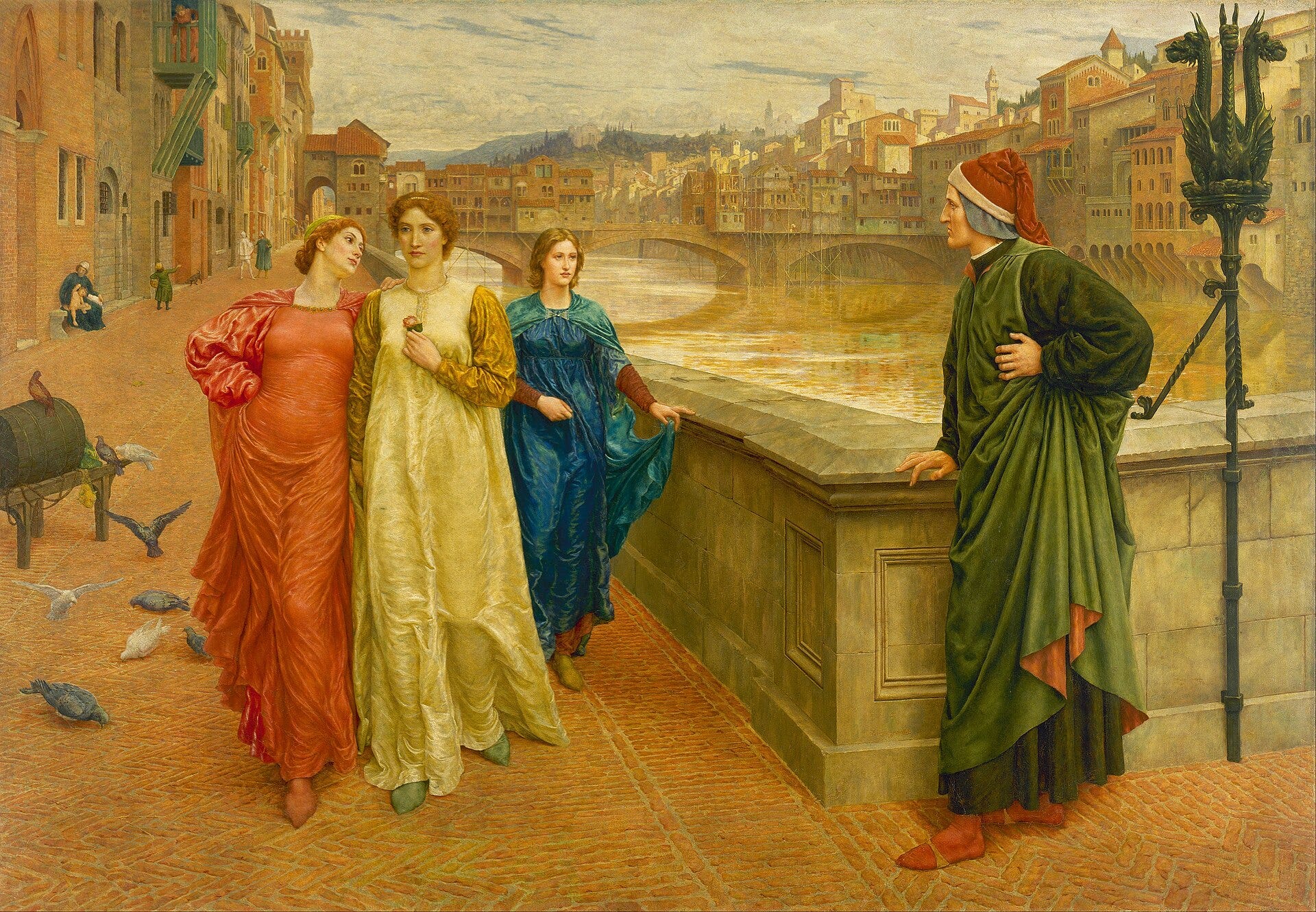
In recent days a fancy has crept upon my vision which I at first tried to cast onto a canvas of immense size, but after much struggle, I saw was a simpler, and indeed shorter, story. That story concerns a private fantasy in which the work of the two greatest poets is co-mingled: that is to say, the talents of Dante Alighieri and William Shakespeare. And as he is the perennial focal point for any narrative involving him, Dante’s exile is the theme, passing out of his native Florence and into the wilderness, where in good time, he arrives at what The Bard called “fair Verona,” which, as it happens, is where we lay our scene.

Exhausted and weary, after witnessing a street brawl wherein the members of two distinguished families are enacting their ancient grudge, Dante stumbles upon a young man hiding in the bushes, having escaped the fray with just a bloody nose: a young man who calls himself Romeo. Together they flee from the approaching carabinieri and sit together in a garden in a quiet courtyard of the city and discuss their love and pain. Romeo tells Dante of a woman called Giulietta whom he loves more than any other maiden; the only shadow over the sundial is that she happens to be a member of the selfsame clan who are his family’s sworn enemies. He weeps as he admits this, and in his eyes appear to the poet little pricks of starlight that call to mind his own lost love, Beatrice, whom he knew as a child, but who later spurned him in the street for a rumor that was untrue. To make matters worse she had been married off at age eighteen to a wealthy merchant and soon after died in childbirth. He still thought of Beatrice at almost every idle moment, which is something he admits to Romeo, preferring to think of her as one of the heavenly host, rather than a corpse interred in the overflowing graveyards of Firenze.
A pact is made, impressed upon the mind of the young lover by the poet’s lofty words. He will help him further charm the Lady Giulietta and while doing so stay with him at his parents’ villa. It is here that Dante follows Romeo, unsure whether fate has intervened on his behalf, or whether inveigling himself amid the populace of some strange city is actually a foolhardy choice.
Nevertheless, he is enchanted by the Montaguo villa. Here, Romeo’s parents greet him with the utmost kindness and express their gratitude for the supposed role he has taken on, which their son tells them is as his “Latin tutor.” Dante, ever hateful of lies and liars, does his best not to dissemble, whilst preserving the good situation which has fallen in his lap, by uttering something to the effect of: “Yes, I have been well-educated in Latin,” and is shown up to his chambers. Once there, he is delighted to see that he is being boarded in the library, a room lined with wooden shelves that house a legion of bound books and a veritable ocean of parchment. When told dinner will soon be served he barely nods, so transfixed is he by what lays before him. Eventually though, there comes the call to supper, and after a brief bath in his own private washroom, he puts on a new set of clothes the family has lent him and strolls down to dinner.
It is then he overhears Romeo’s father talking despairingly of Giulietta’s family, the Capulettis, clear he knows nothing of his son’s new paramour. There is a public event happening at their own villa tonight, a ball, and though he says no Montaguo would ever have deigned to attend, not being invited was a slap in the face, and yet one more cassus belli in this unceasing civil war. At this Romeo knocks Dante’s knee under the table, and the poet, turning to him, hears the young man whisper: “Not if I can help it.”
“Help what?” the poet queries.
“He says no Montaguo would attend a party at the Capulettis. In a few hours we are going to do just that.”
“Is that a good idea?”
“It’s the best idea I’ve had in quite some time.”
After dinner, in which Dante continues to relate to Romeo’s family his experience in the wilds and his reasons for leaving Firenze—to which Signor and Signora Montaguo express their outrage over the poet’s ill treatment—he meets Romeo in his chambers. Inside are two of Romeo’s friends who’ve dropped by, a fellow named Mercutio and another called Benvolio. They are getting ready to crash the ball, and are fastening to their persons flamboyant costumes along with decadent masks to hide their faces. They aid Dante in the choosing of his outfit and soon enough they are strolling the darkening streets of Verona in search of the Capuletti manor.
It does not take long for them to find it. At the entranceway Benvolio lets slip some password he has secretly procured and the four of them enter a resplendent ballroom wherein a throng of revelers are already taking their pleasure. There is wine being passed around and dressed-up livery handing out delectable fare, which the nervous young men swiftly avail themselves of. After a few moments, however, they position themselves upon the winding staircase in order to survey the new arrivals and when Giulietta enters Romeo gasps.
Though she is masked as well, Dante sees that she is gorgeous. Her clothes are of velvet and are draped upon her body in an alluring fashion; and there are flowers in her hair which is intricately coiffed. The mask only covers the upper portion of her face; her eyes are visible, in addition to her shapely lips which seem to beg of kisses. If Beatrice had not been on Dante’s mind, it is little wonder that the poet would have fallen instantly for this Veronese damsel, regardless of what the young Romeo might have felt about it.
There is partnered dancing as the violin music reaches new heights. Dante watches as Romeo makes for his secret love, and in moments the two are swaying together, lost entirely in their private world of rapture. He sees that their affair has gone on for some time and they are in no way strangers. Their familiarity is of brethren, and the fact their own parentage cannot cease their aged strife gives Dante cause to weep. For a part of him is now living vicariously through this young gallant; having never made known to his dear Beatrice the depth and breadth of his passion, he sees helping Romeo as a way of correcting the past. His courage is unspeakable; to fight through ancient hatreds and come to a place of loving, there was no greater triumph. To die for love, if indeed death was in store, that was nothing to lament, or to regret. And the two masked dancers show no inclination of parting ways—that is, until a ringing shout echoes from the upper floor. It is Giulietta’s raffish cousin Tybalt who has recognized both Romeo and his squires and like a swashbuckler is charging at them down the stairs.
“Father Capuletti!” he shrieks. “Four intruders have penetrated our home. That rogue who’s been dancing with your daughter is none other than Romeo Montaguo, young scion of that cursed clan whose name he bears.” He withdraws his sword. “Grant me permission, Uncle, so I may do in this knave and restore the honor of our household!”
“Cease, young Tybalt!” comes a voice from the back of the ballroom. “There will be no shedding of blood in our manor, Montaguo or otherwise! Nevertheless boys,” here the patriarch pauses to remove his mask, revealing a face twisted by contempt and rage, an action which subsequently leads to the removal of masks from all four of the intruders, “nevertheless, these rascals cannot remain in our presence a moment longer. Cast them out!”
And thus Dante once again knows the pain of a forced removal, all to the sound of Giulietta’s moans: her secret has come out, a shadow of suspicion has fallen upon her. She can try and claim she did not know the fellow who’d taken hold of her, but that claim is growing harder to believe. For the goddess Rumor has swept the ballroom and filled every innocent ear with the whispers of love. That was no errant masquerade they’d witnessed, but the dance of the betrothed. Instantly, she is ordered up to bed, while the party draws to a close and Dante finds himself wandering the labyrinthine streets of Verona with three drunk hooligans who care little for propriety or keeping the peace.
It’s as they are wandering in the direction of the Montaguo villa that Romeo tells his friends to hasten to their homes, for he has some pressing business with the poet to take care of. Dante does not know to what business he is referring, but is suddenly trepidatious about being in a new city, and having become so involved in the love lives of the locals.
In the silence of the street, Romeo tells Dante that they must go back, that he must see Giulietta again, and assure her that despite what her father said, his feelings for her are unchanged—indeed, that any change would be impossible, for his affection is as firm as adamant. Soon they are passing through the narrow lanes, once again under cover of darkness, though the moon alights their path, until they reach the Capuletti manor, the scene of the previous conflict. Without waiting to see if any adversaries are about, Romeo tosses a small stone which hits Giulietta’s window and ricochets onto her balcony. In a second, the vision Dante had seen not long before remerges, but this time she wears no mask, nor bears a velvet gown, yet only a modest shift upon which fall many ringlets of dark and curly hair.
“Oh, Romeo, Romeo, where are you Romeo? Was it you who pelted my window with this stone?”
She picks up the piece of rock and cradles it to her bosom as though it is a great gift, a precious jewel from some far away land.
“It’s me, my dear!” Romeo calls, while urging Dante to hide. “I have come back after that wretched scene to tell you once again how much I love you!”
“Why did you return after such a travesty? If my family sees you, dear Romeo, they will murder you. Even my father this time will not spare your life. This place will be the death of you. What do you say to that?”
Now Romeo falls silent. He seems lost in her presence, unable to muster any words save those which profess his love, but do so simply and in a fashion unadorned. At once a phrase comes to Dante’s mind, and a whisper escapes his lips which is audible enough for the gallant to hear, but for Giulietta to remain ignorant of:
“Stony limits cannot hold love out.”
“What?” Romeo turns.
“Stony limits cannot hold love out.”
As Dante repeats himself, the young man finally understands and continues to heed the furious lines the poet begins feeding him from the shadows:
“My dear Giulietta, stony limits cannot hold love out. With love’s light wings did I scale these walls and what love can do I shall dare to attempt. It’s true: I do not fear your kinsmen. For I have the cloak of night to hide me from their eyes, and so I say let them search! Let them find me! My life was better ended by their hate, than death prolong it, wanting of your love.”
Romeo looks back at Dante who has fallen silent. Finally Giulietta calls:
“Do you really love me, Romeo? If you do, pronounce it faithfully.”
“By the moon I swear!”
“Swear not by the moon! It is forever changing, its orbit inconstant and likewise variable.”
“So what shall I swear by?”
“Swear by your gracious self.”
It’s then the young woman is about to go back through her window, until Dante urges Romeo to say:
“Will you leave me so unsatisfied?”
“Will you leave me so unsatisfied?”
“What satisfaction can you have tonight?” she ruefully replies.
“The exchange of your love’s faithful vow for mine.”
“The exchange of your love’s faithful vow for mine.”
“You had mine, gentle sir, before you even asked. The more I give to you, the more I have is infinite.”
There is a sudden scurrying from inside the house, followed by the sound of a woman’s voice, probably a nurse, calling the maiden in from out of doors. Quickly blowing a kiss to Romeo she disappears through a sliver of light leaving the two men behind. The street is silent save for the occasional song of a nightingale or the lonesome wail of a cat. Here Romeo drapes his arm around the poet and urging him along the avenue, Dante feels, for perhaps the first time in his entire life, what it means to be truly in love.
Let’s call this an intermezzo, a scene break, a breath of fresh air. For there is nothing more intense than Shakespeare and the intrusion of Dante into the mise en scene can only make this clever—or callous—confabulation both rich and strange. Allow me thus to skip ahead, or at least to expedite the dramatic process which in this form is as malleable as clay: the wedding happens, attended privately by Dante who acts as witness to the marriage blessing of Father Laurentino, a kindly friar who knows of the longstanding animus between the two clans, but allows the lovers to tarry under God’s auspices all the same.
Still, the dread Tybalt has not forgiven the young Romeo for breaching the threshold of their house, nor for his public dalliance with his cousin; so not long after the wedding he hunts them in the street, finally confronting the young gallant and his friends. Swords are unsheathed as epithets are tossed hither and thither. A terrible clash ensues, with Dante cowering on the sidelines, while Romeo slays Tybalt after a duel of sorts between Mercutio and the fearsome Capuletti. Regrettably, in the fray Mercutio falls as well, and here utters the unchanged words: “A plague on both your houses!”
Romeo flees, with Dante following. A warrant is issued for their arrest and capture which leads to an edict of banishment. There are not many places they can hide and so the lover and the poet find themselves back in the Montaguo household while the men of The Prince come bearing pikes and glinting swords. But not before Romeo can say farewell to his dear Giulietta, who weeps at their departure: they flee the Montaguo household and reach the Capulettis, where Dante observes her throw herself into Romeo’s arms before they are separated, and upon order of The Prince have their love-ties severed. Once again it is the wilderness for Dante—only now he has a companion. They scrounge and they scrape and they fear the nights but celebrate the mornings, and they draw closer to each other than they ever had before.
Soon though, Romeo realizes he must return to Verona, while Dante knows he must press on. Thus he bids farewell to the poet, leaving him in the shade of a tree writing verses, in order to fight for his bride once more, as the Florentine faces his second sorrowful exile, which has come so unexpectedly. But suddenly on his own, the poet grasps that Romeo will likely not survive this youthful dalliance with fate. The night before his flight back to the city of his birth the stars had wheeled overhead, and a bright light had careened through the sky. It had come from a place far off, in the universe above, the Lord’s domain, and crashed somewhere afield. But that little stroke of light, speeding on its way, told the poet that there was no hope. For some a shooting star might mean salvation or something celestial to wish upon; but for Dante it only meant a holy thing had fallen back to earth, and that his young friend’s hours were waning.
Most of us know the end of this tale of doomed inamorati, with an ignominious double-suicide in the Capuletti crypt. Sure, some characters have been removed and scenes excised, some fights abridged and murders left unmentioned, but the basic premise is the same: love cannot be stopped, halted, hindered. Love cannot be relegated to the winds of time, something frivolous to be forgotten or disposed of. Their two corpses sit silent in embrace, as though with life leaving them, all that had remained was love, and so their fatal fixation took its final expression upon their bodies. Indeed, Dante weeps when he sees them, having hustled to Verona already fearing what he might find, and being greeted by Father Laurentino at the gate who tells him he must follow. Dante had seen the dead and dying before, had even fought the Ghibellines some years back. Yet this tragedy hits harder than any previous shedding of blood. For this does truly seem like the death of love, (though the poet comforts himself with the notion that eternity awaits them, since their only crime was against family and custom—not against God or nature.)
It must be said that later, as Dante Alighieri was putting the finishing touches on his comedia he considered eulogizing the young gallant and his bride in the Inferno, among those who had given in to temptation, before realizing that they in no way belonged to that fearsome Second Circle, since their marriage was legal, and they had committed no wrong other than that which others blamed them for. Instead, he allowed his grief to be expressed through the trials of Paolo and Francesca, whose affair had led to their brutal murder. Still, their analogous tragedy did not quite satisfy the poet’s desire for redemption, and thus he penned the since lost La Tragedia di Romeo e Giulietta which in translation roughly three hundred years later made its way to Elizabethan England where it was procured by a humble playwright named William Shakespeare who embellished the tale for the stage and took Dante out completely. Still, it’s my contention that the fingerprints of that supreme poet are traceable upon those sacred pages, and though no semblance of connection to the Florentine has thus far been established, I must beg of the reader to consider it within the realm of possibility. For was there never a more tragic love than that of Romeo and Juliet, nor of Beatrice and Dante? I’ll leave you to answer that question for yourself, for it is in the answering of that question where our art is born, and where any semblance of salvation for these two sets of star-crossed lovers may be found.
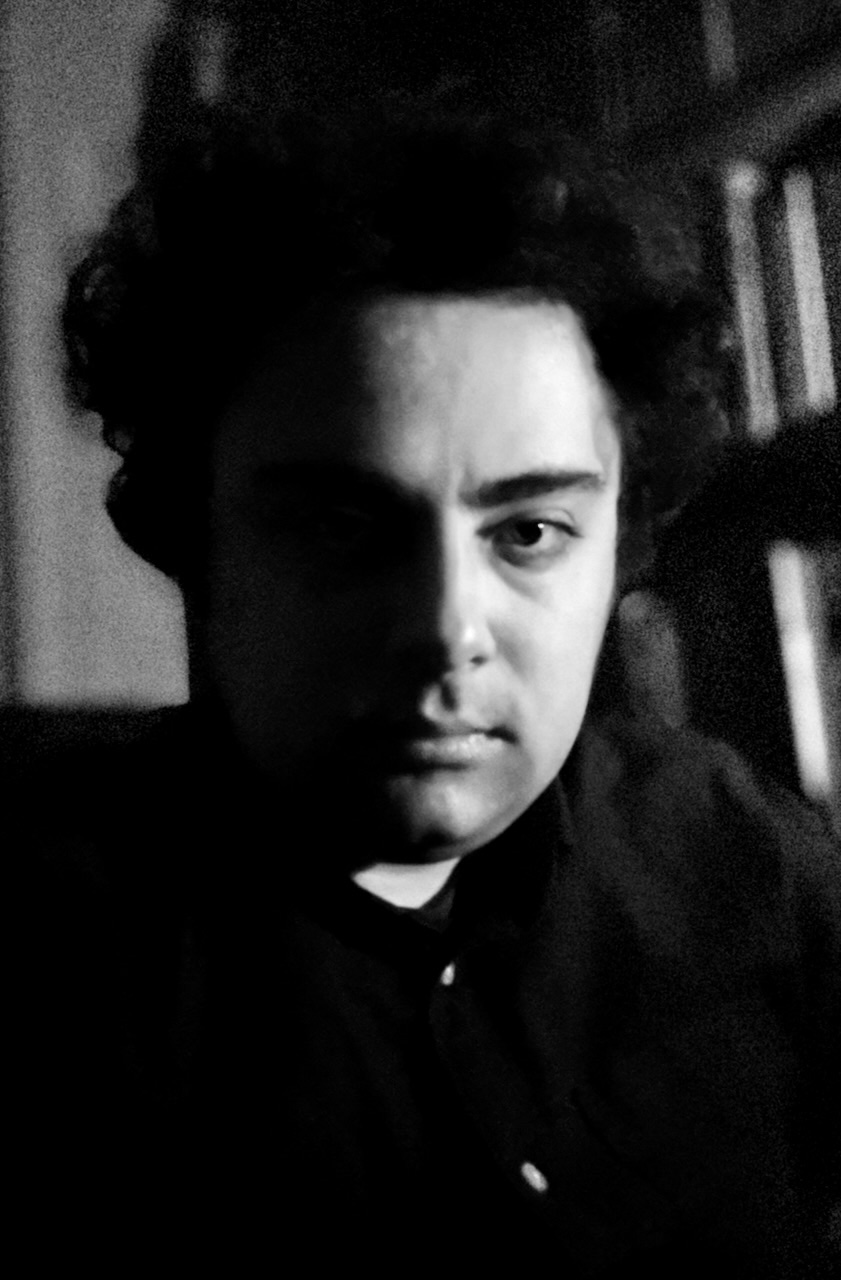
About the Author
M. G. Turner is an author and literary agent in New York City. In 2025, he published Dreams of the Romantics, a chapbook story cycle about the English Romantic poets and their gothic lives which was reviewed favorably by The Seaboard Review of Books and by renowned critic of weird fiction S. T. Joshi in his periodical Spectral Realms. His three other chapbooks are a story cycle about Ancient Rome, Roman Visions, more tales inspired by antiquity in The Museum of Mind and Matter, and a poetry art book, Sotapanna. His first full-length story collection City of Dark Dreams: Tales from Another New York will be out from DarkWinter Press in January 2027. He lives on the Upper West Side of Manhattan, a placid, unassuming neighbourhood he nevertheless considers extremely haunted. He may be reached at mgturnerwriter@gmail.com
If you enjoyed this story, here’s an earlier one by the same author:
The Song of the World: Short Fiction by M. G. Turner

No one knew from whence the blind bard hailed. It was like he simply appeared, gnarled staff in hand, confidently climbing those rocky Anatolian hills despite his age-old blindness. Some said he had been brought to their shores a slave, by pirates, having entertained them on their long sea voyag…