
The Seaboard Review of Books
Issue Date: Monday, June 29, 2026


In this issue:
No More Fridays by Lesley Choyce (Fiction)
Acadian Shorelines by Patrick d’Entremont (Fiction)
Pushing Hope: An Illustrated Memoir of Survival, By Raymond Santana, illustrated by Keith Henry Brown (Non-Fiction)
The Hidden Hand: The Information War and the Rise of Antisemitic Propaganda by Warren Kinsella (Non-Fiction)
The Book of Interruptions by Khashayar “Kess” Mohammadi (Poetry)
Yield: a poem by Jaime Forsythe (Poetry)
Thanks for reading this issue of The Seaboard Review of Books!
James M. Fisher, editor-in-chief

Fiction
No More Fridays by Lesley Choyce

Lesley Choyce came into my life a couple of years ago when I read his novel The Second Season of Jonas MacPherson. When I finished reading that novel, I thought how amazing it was that an author could pack so much emotion and such a strong message into so few pages. Choyce is talented beyond words, and
Acadian Shorelines by Patrick d’Entremont

In Acadian Shorelines, Patrick d’Entremont tells the uplifting, sometimes heartbreaking, but always entertaining tale of young Tommy Breau, who in the late 1960s is coming of age in a tiny French-speaking Nova Scotia fishing village called Glen River.

Non-Fiction
Pushing Hope: An Illustrated Memoir of Survival, By Raymond Santana, illustrated by Keith Henry Brown

On April 19, 1989, a young woman jogged into New York City’s Central Park. Her exit was horrifically different. Medics carried the 28-year-old out on a stretcher, an unknown assailant(s) having raped and beaten her so savagely she almost died.
The Hidden Hand: The Information War and the Rise of Antisemitic Propaganda by Warren Kinsella

When protests erupted across Canada, the United States and Europe immediately after Hamas’s Oct. 7, 2023 attack on Israel, veteran political strategist Warren Kinsella saw the same slogans, signs and tactics surface in city after city, worldwide. To someone who had spent decades running political campaigns, it had all the tell-tale signs of a coordinate…

Poetry
The Book of Interruptions by Khashayar “Kess” Mohammadi

Ludwig Wittgenstein said, “… one should write philosophy only as one writes poetry.” In The Book of Interruptions, Khashayar “Kess” Mohammadi has created a philosophy in verse, including in their subjects, Persian Islamic mysticism, French psychoanalysis, queer theory, and Marxist critique.
Yield: a poem by Jaime Forsythe

I know you think that taking your newborn to a cottage at the seaside is a good idea, but it really isn’t. All that seastuff is very squashy and gross and maternal-body-organic, and anyway the isolation is really gonna get ya, postpartum-wise. It might, however, be good for your poetry.

June’s Saturday Shorts
Verona, Summer by M. G. Turner

In recent days a fancy has crept upon my vision which I at first tried to cast onto a canvas of immense size, but after much struggle, I saw was a simpler, and indeed shorter, story. That story concerns a private fantasy in which the work of the two greatest poets is co-mingled: that is to say, the talents of Dante…


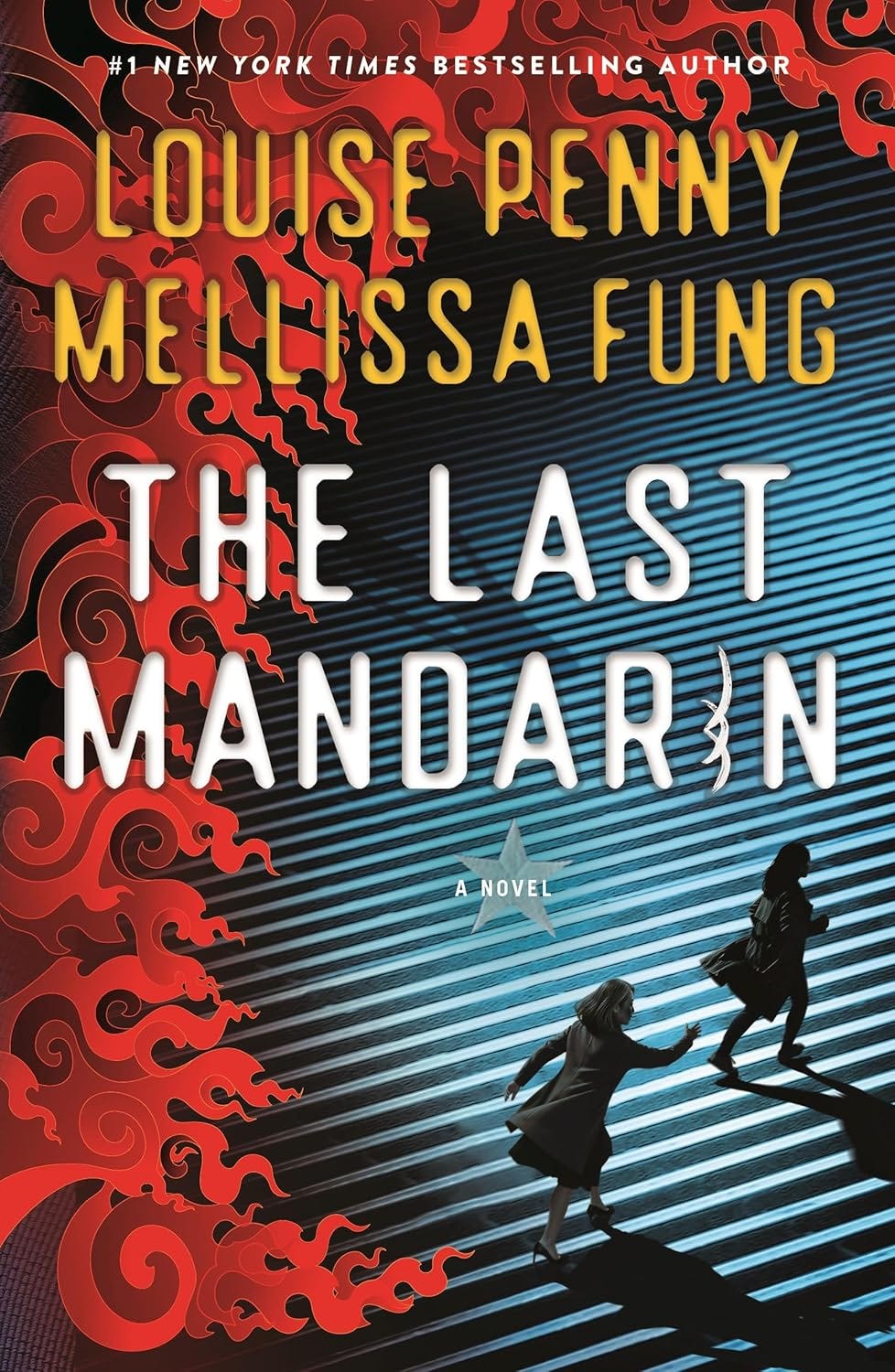
The Last Mandarin
In the thriller The Last Mandarin, written by Louise Penny and Mellissa Fung, a famous dissident and a food blogger must overcome their sometimes-frosty mother-daughter relationship as they work together to foil a sophisticated, high-tech terror plot. The Last Mandarin whisks readers from the United States to China, making side stops in other locales.
The novel is co-written by Penny, known for her Chief Inspector Armand Gamache mystery novels, and Fung, a journalist, author, and award-winning filmmaker. Though The Last Mandarin is not set in Three Pines or other locales familiar to fans of Penny’s writing, her characteristic humor, unique phrasing, and keen insights into human nature are evident throughout the book.
In some of Penny’s other novels, resonance is added through tie-ins to real-world objects or events. Her novel A World of Curiosities, for example, includes references to a painting known as The Paston Treasure, and to the tragic December 6, 1989 shootings of female engineering students at École Polytechnique. Similarly, in The Last Mandarin the events of Tiananmen Square are alluded to, as is Chinese Emperor Qin Shi Huang’s elaborate mausoleum with its terracotta warriors.
The Last Mandarin includes multiple plot twists keep readers guessing, and we’re never quite sure to trust. This co-authored novel is a layered work, blending history, politics, and fraught family relationships. An enjoyable and engrossing read. (Lisa Timpf)

